

Routing
1. Day: Arrival

Today the adventure begins. You board your flight to Oman and slowly leave Europe behind. Your destination is Muscat, the capital of the Sultanate, a place where traditional Arab culture and modern development blend together in a surprisingly harmonious way.
As the overnight flight carries you towards the Arabian Peninsula, anticipation grows for the days ahead: winding mountain roads in the Hajar Mountains, remote wadis, lively markets and the vastness of the desert.
By tomorrow morning you will arrive in Oman – and the journey on two wheels begins.
2. Day: Arrival in Muscat

Early in the morning you arrive in Muscat. After immigration we will meet you at the airport and transfer you to the hotel. First take some time to settle in – perhaps a few hours of sleep, a shower and a relaxed breakfast.
Later we set out for a first short exploration of the capital. We visit the impressive Sultan Qaboos Grand Mosque, one of the architectural landmarks of the country. Afterwards we continue to the Al Alam Palace, the ceremonial residence of the Sultan.
To round off the tour we stroll along the Mutrah Corniche and through the traditional souq, where spices, frankincense and silverware are offered in countless small shops.
In the afternoon the motorcycles will be delivered – time for the first encounter with our bikes and a short briefing.
3. Day: Wadi Tour / ca. 210 km

For the first time we get on the motorcycles. The day is designed to familiarise us with the bikes, the traffic and the roads of Oman, while already taking us deep into the country’s fascinating landscape.
Our route leads us out of Muscat into the world of the wadis, dry river valleys that cut deep into the mountains. Small villages, rugged rock formations and green oases appear again and again along the way. The ride offers a pleasant mix of asphalt sections and dusty stretches through the dry riverbeds of the wadis, ideal for getting a first feeling for riding in Oman.
Towards the end of the tour we reach the coast near As Seifa. After the partly dusty ride through the wadis, a refreshing break is most welcome: there is time for a swim at the long sandy beach of the Gulf of Oman before we return to Muscat in the afternoon.
4. Day: Ride to Al Musanaah / ca. 210 km

Leaving Muscat, our route heads west along the foothills of the Hajar Mountains. Oman is currently investing heavily in its infrastructure, and many roads are now in excellent condition. For motorcyclists this means less adventure perhaps, but relaxed cruising through a wide and varied landscape.
Our first destination is the impressive Nakhal Fort. The powerful fortress stands on a rocky outcrop above a green oasis and is considered one of the most beautiful historic forts in the country. Nearby you will also find the warm springs of Nakhal, which have been used by locals for centuries.
Later we reach Rustaq, one of the oldest towns in Oman. Its large fort still dominates the townscape today, even if restoration work sometimes takes longer than planned.
In the afternoon we finally reach the coast near Al Musanaah. Our comfortable resort by the sea provides the perfect place to relax and end the day.
5. Day: Ride to Sohar / ca. 265 km

We leave the highways behind and ride into the mountains of the Hajar range. The road leads through an increasingly rugged landscape of rocky slopes, small settlements and wide views across Oman’s mountain scenery.
Winding roads, constantly changing perspectives and little traffic make this a particularly enjoyable day on the motorcycles. We follow a route that is rewarding both for the riding and for the surrounding landscape.
In the afternoon we reach the coastal town of Sohar. According to legend, this was once the home of the famous seafarer Sinbad. Today Sohar is a modern port city and at the same time a good starting point for our further journey back towards the mountains.
6. Day: Ride to Nizwa / ca. 305 km

Another impressive motorcycle route takes us through the mountains. The road follows remote tracks through a stark yet fascinating landscape where small villages cling to the slopes.
Along the way we visit a remarkable archaeological site: the nearly 4,000-year-old Beehive Tombs of Al Ayn. These beehive-shaped burial towers are among the oldest surviving structures on the Arabian Peninsula and offer a fascinating glimpse into the early history of the region.
In the afternoon we reach Nizwa, one of the most historically important cities in Oman. For centuries it served as the religious and political centre of the country. We stay here for several nights and explore the fascinating surroundings from this base.
7. Day: To Jebel Shams / ca. 195 km

The route leads us deeper and deeper into the Hajar Mountains and finally up to the highest peak in Oman, Jebel Shams, the “Mountain of the Sun”. The road ranks among the most impressive mountain rides in the country.
Our first stop is the mountain village of Misfat al Abriyyin. Narrow lanes, old mud houses and traditional terraced fields offer a vivid impression of life in Oman’s mountain regions.
We then continue to Al Hamra, where we visit an abandoned mud-built town. The multi-storey houses made from traditional materials provide a fascinating insight into the former architecture and way of life in this region.
From here the road climbs steadily towards Jebel Shams. The final kilometres follow a narrow mountain road and require focused riding, an exciting stretch for motorcyclists. At the top we are rewarded with spectacular views into the vast canyon often referred to as the “Grand Canyon of Arabia”.
8. Day: Goat Market and Fortresses of Oman / ca. 95 km

The day starts early, as the famous Nizwa Goat Market takes place only in the morning. We should arrive by around seven o’clock at the latest, when the market activity reaches its peak.
In a large circle, traders from the surrounding villages present their animals. Calling out loudly, they lead their goats around again and again while potential buyers inspect them and negotiate prices. Besides goats, camels and cattle are also offered. At first the scene may appear a little chaotic, but it follows a well-established rhythm – a lively piece of everyday Omani culture.
After this fascinating experience we set out on a short ride through the surroundings of Nizwa. Riding itself is less the focus today; instead we visit several interesting historic sites in the region.
Our first stop is Tanuf. The ruins of the old village tell the story of Oman’s turbulent past and offer an intriguing insight into the region’s traditional architecture.
We then continue to Bahla, one of the oldest towns in Oman. The massive Bahla Fort is a UNESCO World Heritage Site and still dominates the town’s skyline today.
Finally we visit the beautiful Jabrin Castle. Its richly decorated rooms, painted wooden ceilings and inner courtyards make it one of the most impressive historic buildings in the country.
9. Day: Excursion to Jebel Akhdar / ca. 140 km

Jebel Akhdar, the “Green Mountain”, is one of the most fascinating regions of Oman’s high mountains. The steep and winding road leading up is officially restricted to four-wheel-drive vehicles. Motorcycles are sometimes allowed as well, but the regulation is not always applied consistently.
To avoid the risk of having to turn back at the checkpoint, we leave the motorcycles behind for the day and travel into the mountains by SUV. This allows us to enjoy the impressive scenery of Jebel Akhdar in a relaxed way.
At the foot of the mountains lies the idyllic village of Birkat Al Mouz. Old mud houses, palm groves and the traditional irrigation channels known as falaj systems shape the appearance of this historic settlement, which once served as an important gateway to the mountains.
From here the steep and winding road climbs up to the high plateau of Jebel Akhdar. The region is particularly famous for its terraced fields where fruit, pomegranates and especially the well-known Damask roses have been cultivated for centuries.
In spring – and therefore during the time of our journey – many of these rose terraces are in bloom. The petals are traditionally distilled into rose water, a product with a long cultural and culinary tradition in Oman.
Further up we visit small mountain villages such as Al Ayn and the beautifully situated Wadi Bani Habib, whose old houses cling to the steep mountain slopes.
The excursion concludes at the famous Diana's Viewpoint, offering spectacular views across the deep valleys and terraced slopes of Jebel Akhdar.
10. Day: Adam and Wadi Bani Khalid / ca. 295 km

The route now leads us out of the mountains around Nizwa and southward into the interior of Oman. The landscape gradually becomes wider and drier as we ride through the open countryside.
Along the way we stop in Adam. The town once served as an important gateway to the desert. From here, caravans loaded with goods set out with their camels towards the south, following long trading routes across the desert all the way to Salalah.
Adam was the last major settlement before the vast sands began. Here merchants and travellers stocked up on water, food and everything they needed for the often weeks-long journey across the desert. Walking through the abandoned mud-built town still evokes a sense of those times.
In the afternoon we reach the beautiful Wadi Bani Khalid, one of the most famous oases in Oman. Our hotel is located high above the valley in a new and comfortable resort with wide views across the surrounding landscape.
A steep footpath leads down into the wadi, where natural pools filled with clear spring water invite you for a refreshing swim – the perfect place to relax after the long ride and enjoy the atmosphere of this green oasis.
11. Day: Into the Desert / ca. 60 km

This stage takes us into the famous Wahiba Sands, one of the most impressive desert regions of Oman. We first ride about 60 kilometres to a meeting point at the edge of the dunes.
From here the roughly 20-kilometre ride through the desert to our camp begins. Riding through deep sand can be quite challenging on a motorcycle and is not everyone’s preference.
Those who prefer can safely leave their bikes here and continue comfortably by four-wheel-drive vehicle to the camp for a small fee – for many the easier and more relaxed option.
Our destination is a desert camp built in traditional Bedouin style, nestled among the dunes. Here we experience the special atmosphere of the Wahiba desert, with its vast open spaces, softly shaped dunes and the remarkable silence of this landscape.
12. Day: A Day in the Desert
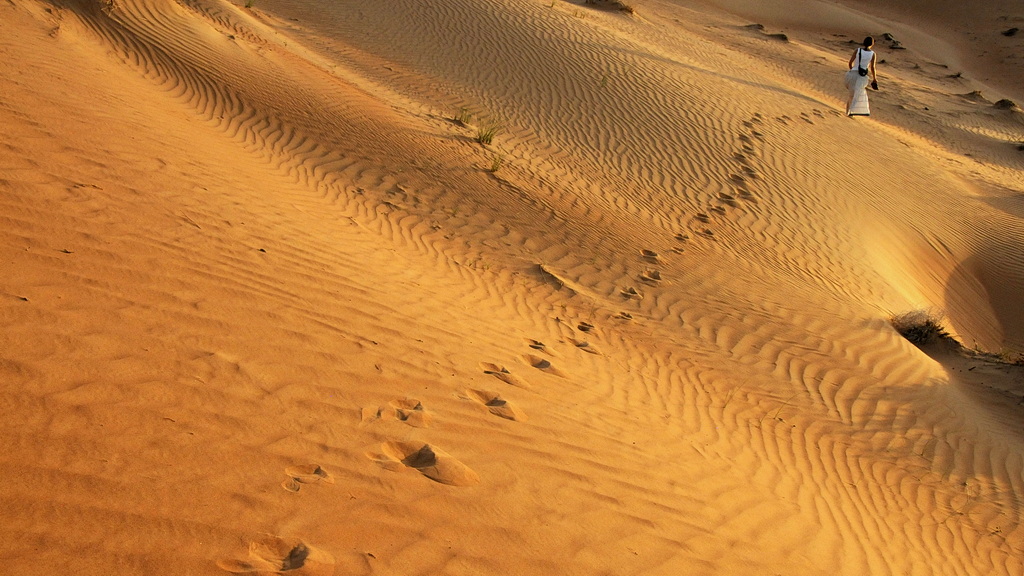
After our arrival in the Wahiba desert, this day is dedicated entirely to the unique atmosphere of the dunes. The motorcycles remain parked today; there is no fixed route and no set programme, just time to experience the desert at a relaxed pace.
Those who wish can spend the day quietly: sitting in the shade of the central tent with tea and dates, enjoying the silence of the desert, or taking a walk among the dunes.
Alternatively, several activities are available. Popular options include a camel ride through the dunes or, for a truly special experience, a hot-air balloon flight above the desert landscape. These activities are offered by local providers, are not included in the tour price and can be booked on site for an additional fee.
Our camp lies at the foot of a high dune. In the late afternoon it is well worth climbing the soft sand for a short distance. From the top there is a wonderful view across the endless sea of dunes. At sunset in particular, the desert reveals its most beautiful colours as the light turns the sand into warm shades of gold.
However the day is spent, the vastness of the Wahiba Sands, the play of light and shadow across the dunes and the deep silence of the desert make this an unforgettable experience.
13. Day: Wadi Bani Khalid – Sur / ca. 170 km

After our stay in the Wahiba desert we leave the dunes behind and head back towards the coast.
Along the way there is the option of making another stop at Wadi Bani Khalid. Those who wish can enjoy another swim in the clear pools of this beautiful oasis. If the majority of the group prefers to continue directly, we simply carry on towards the coast.
In the afternoon we reach the coastal town of Sur, which for centuries was one of the most important centres of Omani maritime trade.
Sur is especially famous for the construction of traditional Arab wooden sailing vessels known as dhows. In one of the last remaining shipyards in the country, these vessels are still built by hand – an impressive craft that has survived to this day.
There is time for a short stroll through the souq, a look at the fort or a walk along the beach. Sur also serves as the starting point for our next destination: the famous Wadi Shab, which we will explore the following day.
14. Day: Wadi Shab / ca. 90 km
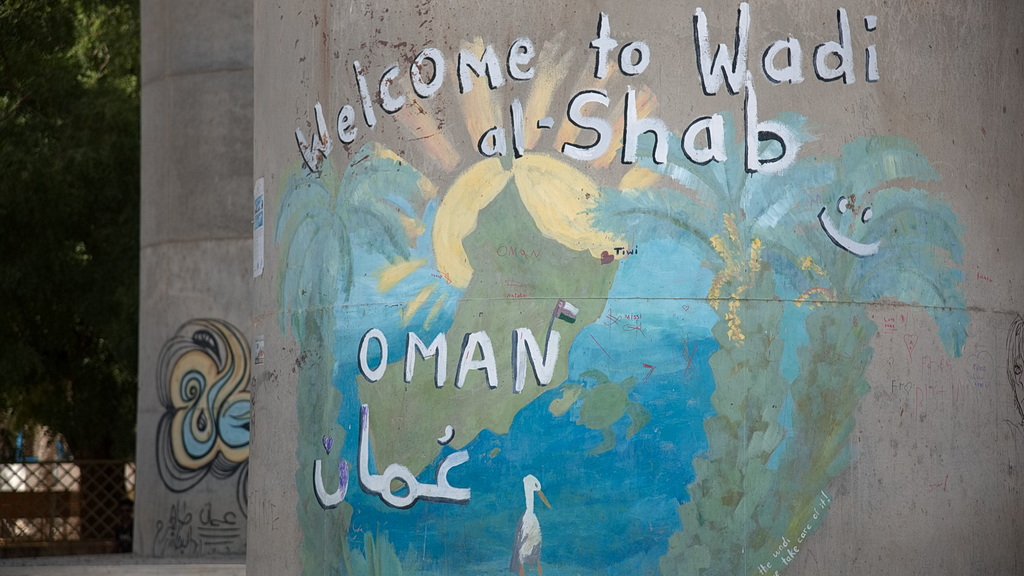
This stage is relatively short, as our destination lies not far away: the impressive Wadi Shab, one of the most beautiful wadis in Oman.
After arriving, we cross the river by small boat to the opposite bank. From there the hike into the wadi begins. The trail follows steep rock walls, passing palm trees and turquoise pools as we gradually make our way deeper into the gorge.
After about an hour and a half we reach the natural pools inside the wadi. Here begins the most impressive part of the excursion: by swimming through several connected pools of crystal-clear water, it is possible to continue further into the narrow canyon.
Swimming and bathing in this remarkable landscape is one of the highlights of the journey. We take plenty of time to explore the wadi, and this excursion can easily fill the entire day.
15. Day: Ride to Muscat / ca. 170 km

The final major motorcycle stage brings us back to Muscat. The route partly follows the coastline but also leads through wadis and along quiet secondary roads.
Along the way we reach the impressive Wadi Dayqah with its large dam, set between steep mountain slopes. From here there are beautiful views across the valley and the surrounding mountain landscape.
The road then continues towards the capital, and in the afternoon we arrive once again in Muscat, where the circle of our journey closes.
In the evening or the following morning the motorcycles will be returned to the rental company. This officially marks the end of the riding part of our tour.
16. Day: Free Day in Muscat, Farewell Dinner

This day is at your leisure. After many eventful days on the motorcycles, there is time to enjoy Muscat at a relaxed pace.
You may wish to stroll once more along the Mutrah Corniche, wander through the souq, or simply relax by the sea. A visit to a café is also a good opportunity to reflect on the experiences of the past days.
In the evening we meet for a shared farewell dinner at the marina of Al Mouj. From the terrace of the restaurant we enjoy the view of the boats and yachts in the harbour as calm slowly settles over the marina – a fitting setting to bring this journey to a close together.
17. Day: Farewell and Journey Home

Today it is time to say goodbye to Oman. Depending on your flight time, we transfer you to Muscat airport.
Many guests arrive without a clear picture of this country and leave with a wealth of unforgettable impressions. The mountain landscapes of the Hajar range, the rose terraces of Jebel Akhdar, the vast Wahiba desert, green wadis and the calm waters along the coast reveal just how diverse and surprising Oman can be.
With many memories of a remarkable journey and a fascinating country, you begin your journey home.