



Guided motorcycle tour across India – from the Himalayas to the southern coasts
Routing
1. Day: Flight to Delhi
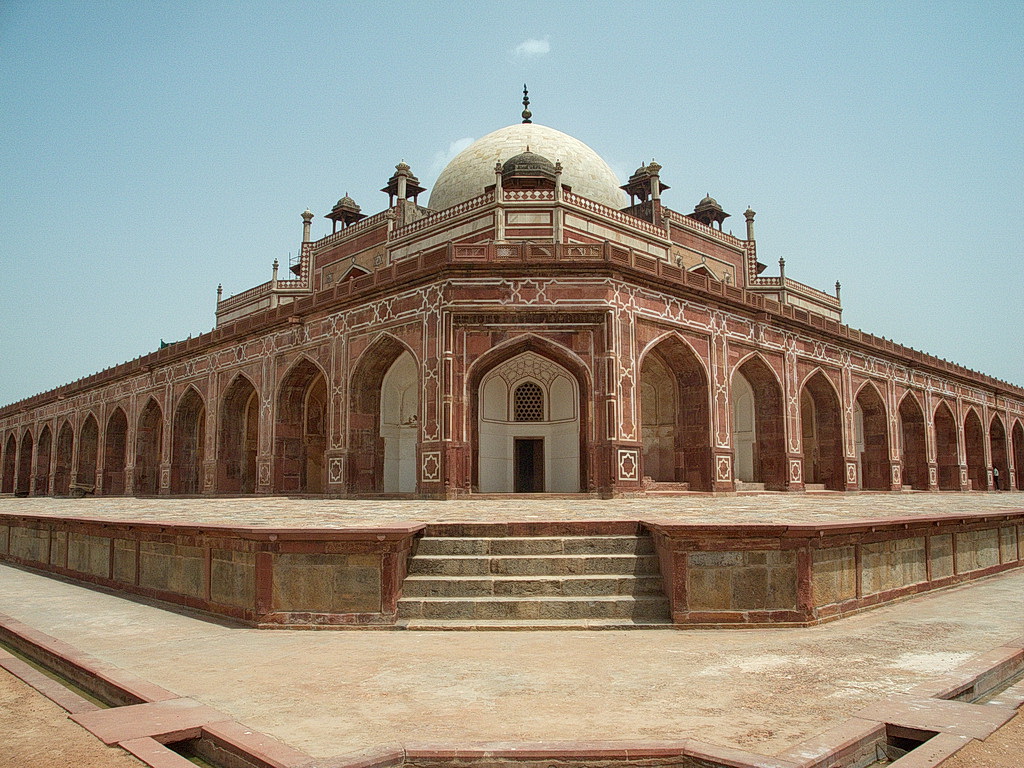
The adventure is about to begin.
Your visa has been issued, your vaccinations are up to date, your flight is booked, your riding gear is packed ... and before you know it, you are on board your flight to New Delhi, India's vibrant capital.
Have a good trip!
Your international flight to India is not included in the tour price. Our tour begins with the domestic flight from New Delhi to Srinagar (see Day 2).
2. Day: Flight to Srinagar
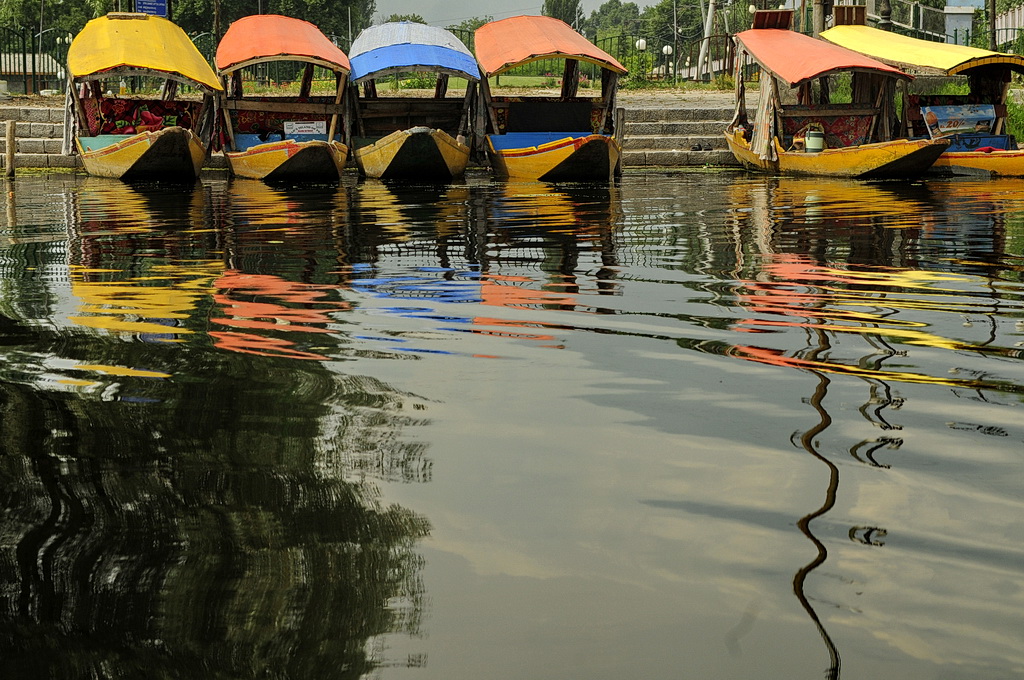
No sooner have you arrived in Delhi than it is time to continue your journey. You may have to transfer to the domestic terminal, but a free shuttle bus is available. Soon your flight takes off for Srinagar, the capital of Kashmir. Your Royal Enfields are already waiting there, eager to carry you safely through their homeland.
3. Day: Relaxing on Nagin Lake in Srinagar
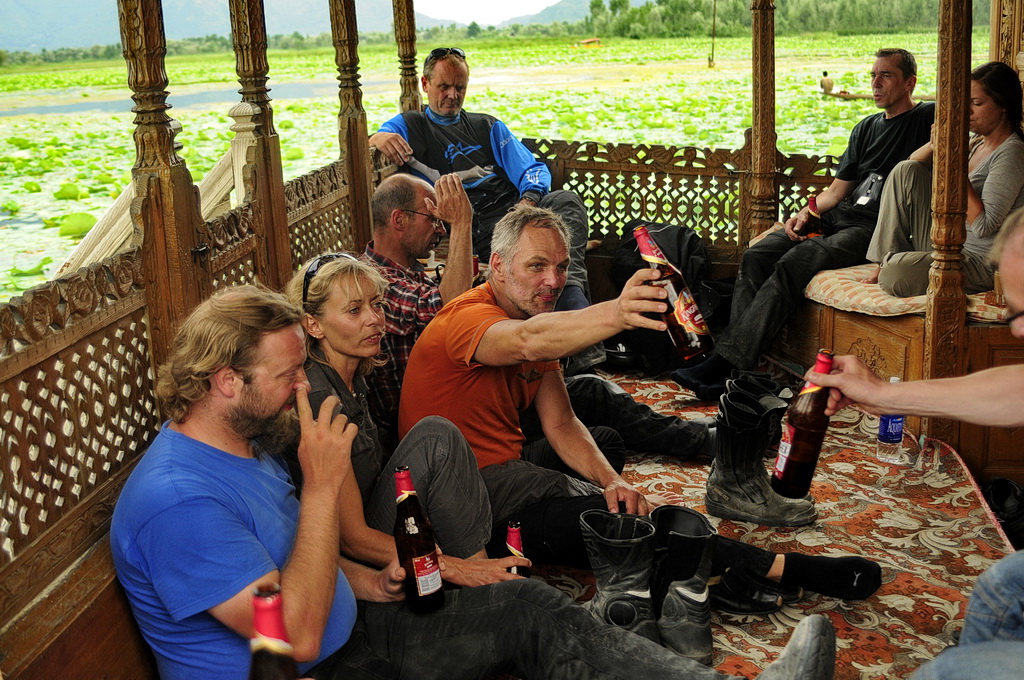
But before the real adventure begins, it is time to relax and get to know each other. On one of the elegant houseboats on Nagin Lake, you will have the chance to settle in and arrive in a world so very different from your own. Enjoy the peace and quiet, because before long India will cast its spell over you – and demand a great deal from you.
You will soon find yourselves longing for these horn-free moments.
4. Day: Srinagar - Kargil / ca. 200 km
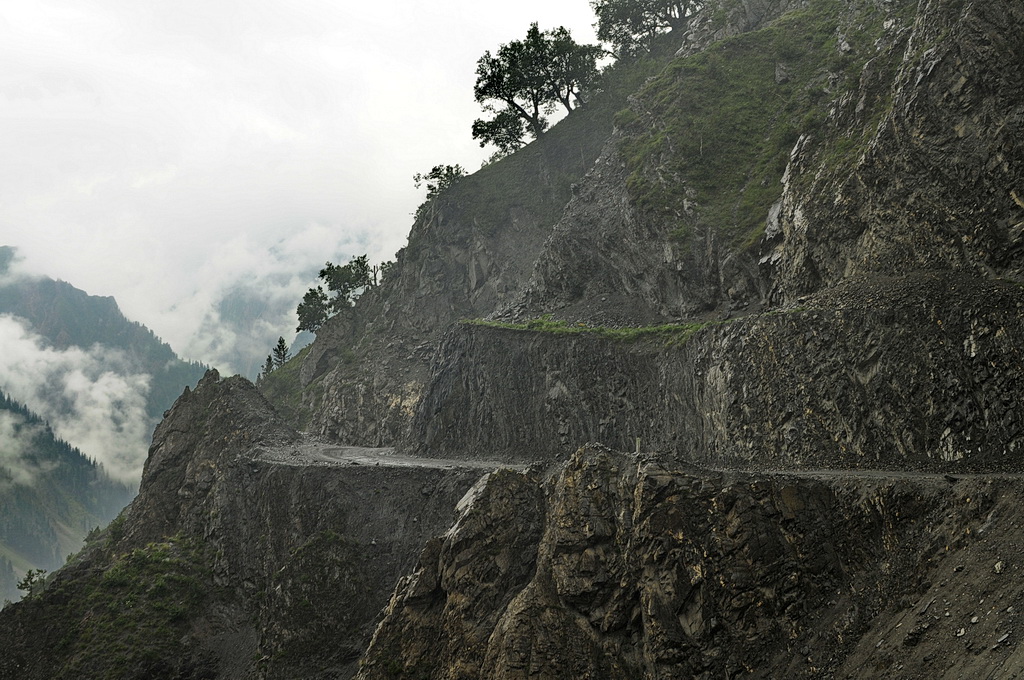
Your first day on the road – and your first real challenge. After an easy start through the "Switzerland of India", the Zoji La awaits: a mountain pass rising above 4,000 metres and, thanks to its often rough road conditions, one of the most demanding passes of the entire tour. Let's hope it doesn't rain. You'll soon understand why.
But don't worry. We have crossed the Zoji La dozens of times, and apart from a few fluttering nerves, nothing has ever happened.
Welcome to the Indian Himalayas.
5. Day: Kargil - Lamayuro - Alchi - Leh / ca. 225 km
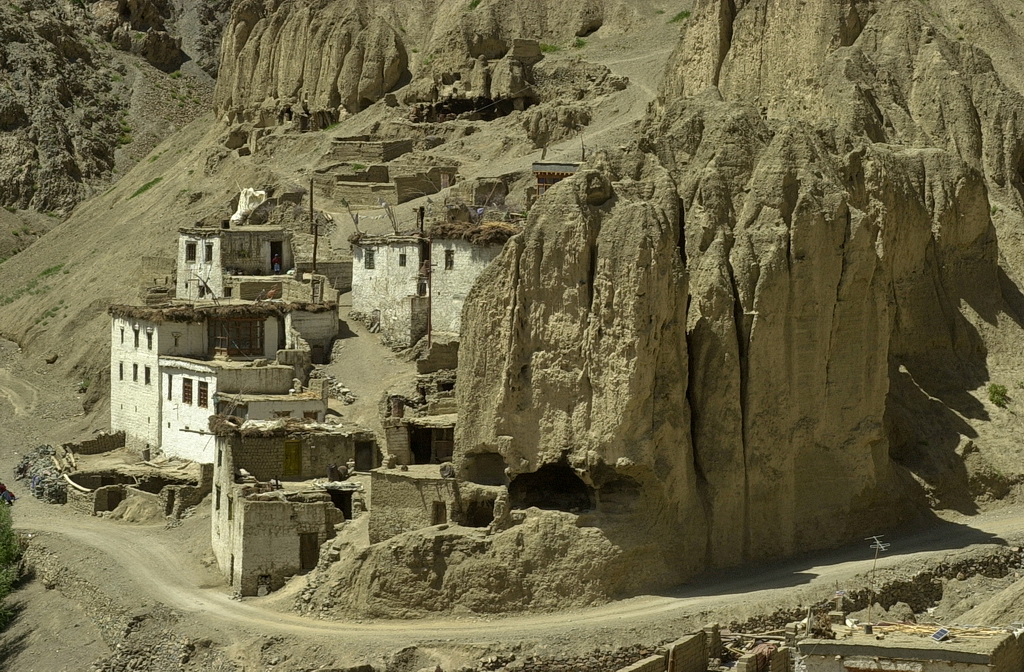
Kargil is the last predominantly Muslim town on our journey. A walk through its streets is a rewarding cultural experience. Beyond Kargil begins the world of Tibetan Buddhism, and you will notice the change immediately. Incidentally, this is also where beer becomes considerably cheaper. As the sale of alcohol is heavily restricted in Muslim-majority Kargil, hotels charge western visitors handsomely for satisfying their craving. Here, a bottle of Kingfisher can easily cost three or four times the normal price. My recommendation is simple: stay abstinent just a little longer.
Better times lie ahead – even for beer lovers.
6. Day: Daytrip to the Kardung La / ca. 80 km
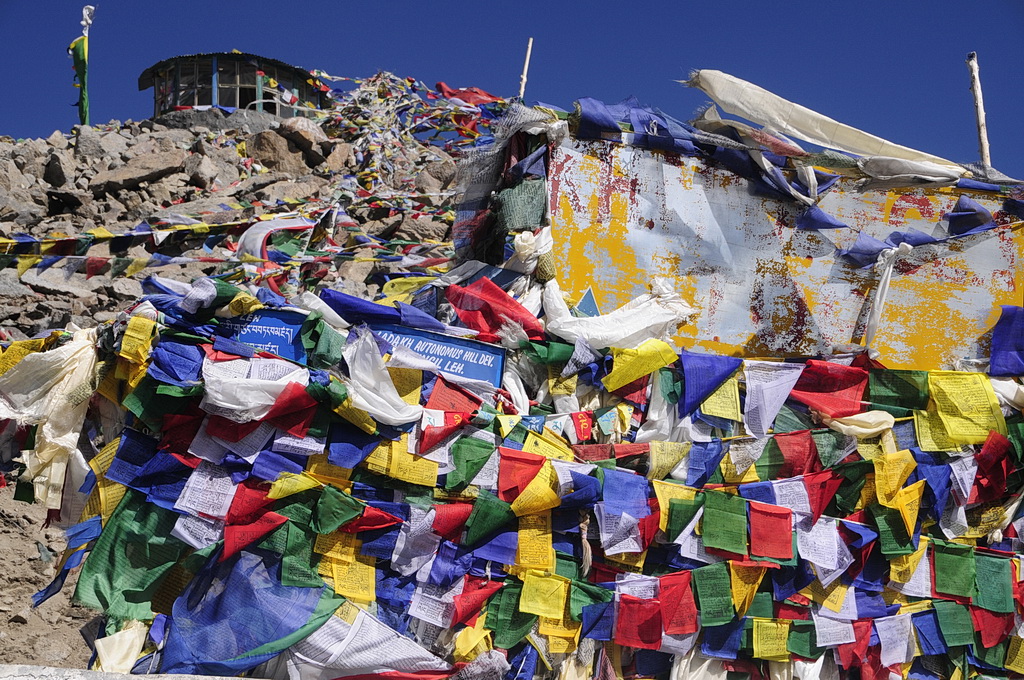
A journey through Ladakh without visiting the Khardung La is like visiting Paris without seeing the Eiffel Tower or Rome without the Colosseum. For decades, its officially stated altitude of 5,603 metres earned it the title of the world's highest motorable pass, although that figure has always been disputed. Today, the Umling La and the Mig La have long since taken over that distinction. But that has done nothing to diminish its reputation. For motorcyclists, the Khardung La remains one of the world's most legendary mountain passes.
Only about 40 kilometres separate Leh, the capital of Ladakh, from the summit. Much of the road has now been resurfaced, but the final 15 kilometres still demand your full attention. Here, the line between on-road and off-road begins to blur. The rough ride is well worth it, rewarding you with the unforgettable feeling of reaching one of the true legends of the motorcycling world – not to mention a cup of tea at what is probably the highest tea shop in the world.
7. Day: Leh - Sarchu / ca. 260 km
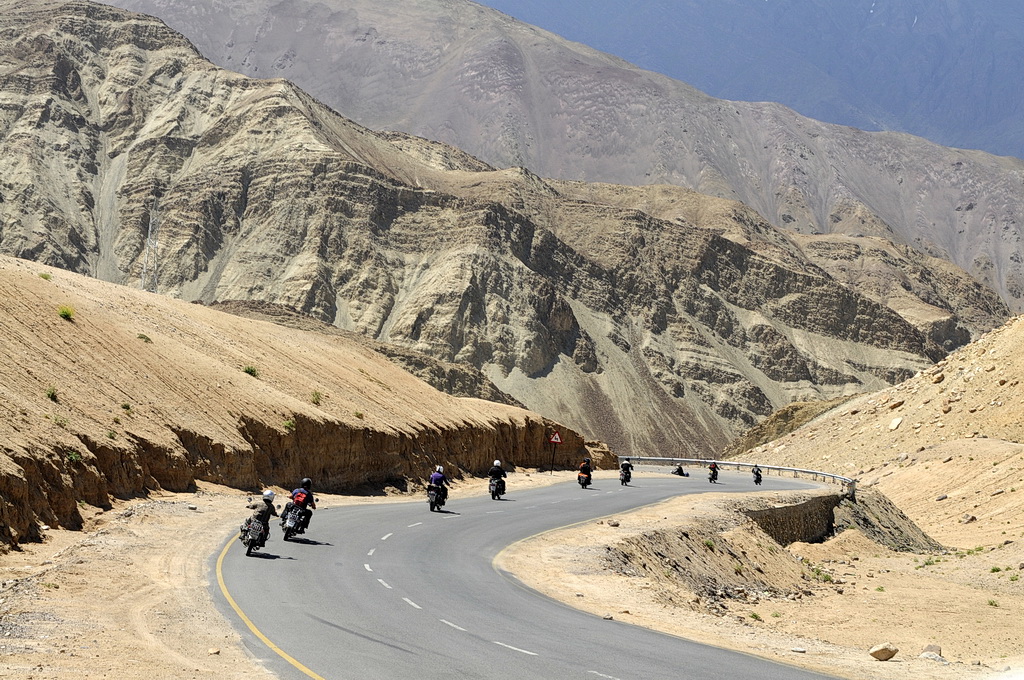
We leave Ladakh behind and continue our journey south. Five high mountain passes lie ahead, each rising to around 5,000 metres above sea level. Ladakh literally means "Land of High Passes". By the end of today, you will understand why that name could hardly be more appropriate.
Tonight we stay at a permanent tented camp at an altitude of around 4,000 metres. By now, however, our bodies should have adapted to the altitude, so we can look forward to a comfortable night's sleep.
8. Day: Sarchu - Sissu / ca. 135 km
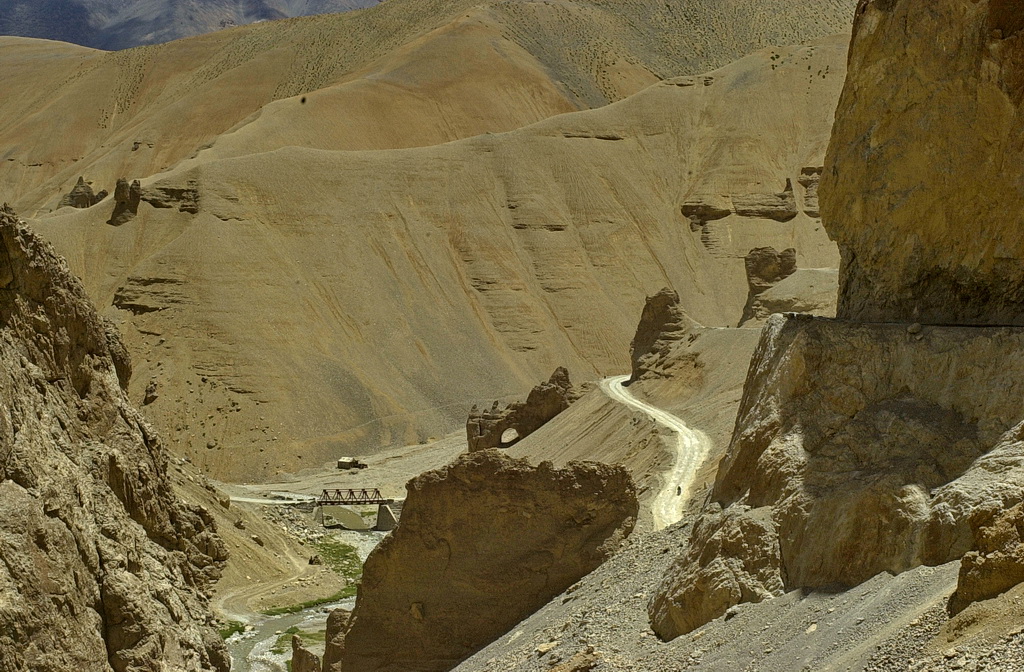
Today once again treats us to spectacular scenery as we ride through the high-altitude deserts of Lahaul and Ladakh. By evening we reach Sissu, an idyllic village on the banks of the Chandra River, where we will spend the night.
9. Day: Sissu - Rewalsar / ca. 170 km

For many years, the Rohtang La was one of the highlights of our tours. Although, at just under 4,000 metres, it is comparatively low, it almost always had a surprise in store for us. Sometimes relentless rain and axle-deep mud turned the pass road into one long slippery challenge, while at other times we found ourselves riding through knee-deep snow even in August. We will never forget the moments when motorcycles disappeared up to their axles in the mud or when we carefully picked our way across icy sections.
Those days, however, are now over. Since the opening of the nine-kilometre-long Atal Tunnel, traffic disappears into the mountain shortly before the pass and emerges again on the other side. The journey between Manali and Ladakh has become considerably faster and safer.
Am I pleased about that? To be honest, no. As demanding as the Rohtang La could sometimes be – its name, translated from Persian, means "Mountain of Corpses" – it was always a real adventure. Today we simply drive nine kilometres through a tunnel. It is certainly the more sensible solution. But the pass was far more exciting.
By evening we arrive in Rewalsar, a small pilgrimage town clustered around a sacred lake. Hindus, Buddhists and Sikhs alike regard this place as holy. High above the town stands the impressive statue of Padmasambhava, watching over the valley.
10. Day: Rewalsar - Amritsar / ca. 265 km
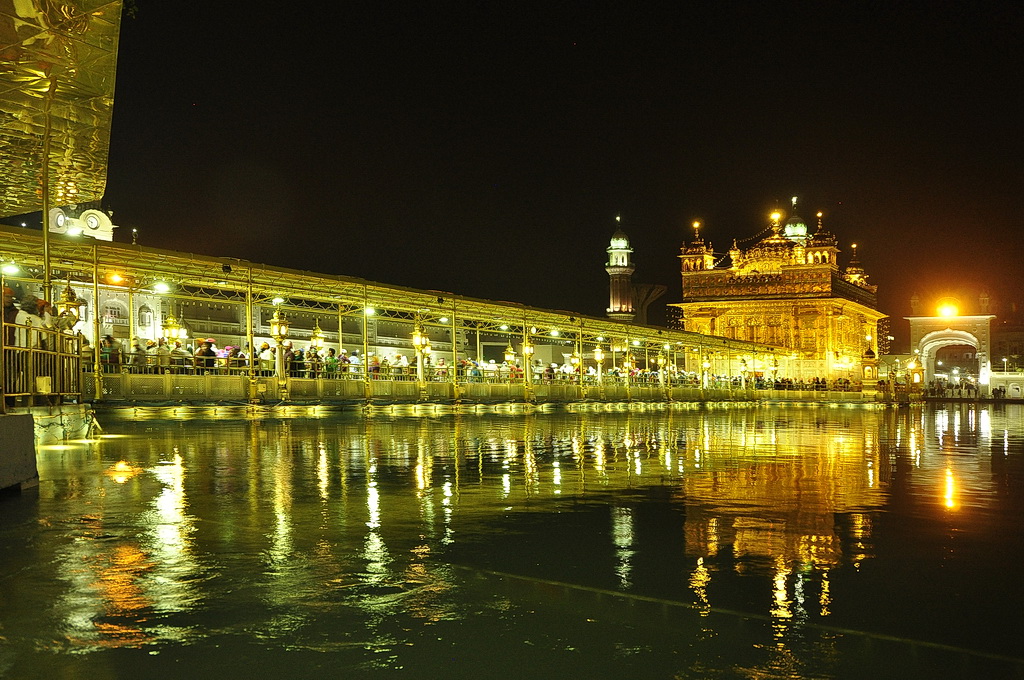
At first glance, 265 kilometres may not seem like much of a challenge. But in India, distances are measured by different standards. Especially in the mountains, every bend in the road holds a new surprise, and once again we will spend many hours in the saddle today. By late afternoon we finally reach our destination for the day: Amritsar, the spiritual home of the Sikhs.
11. Day: Amritsar
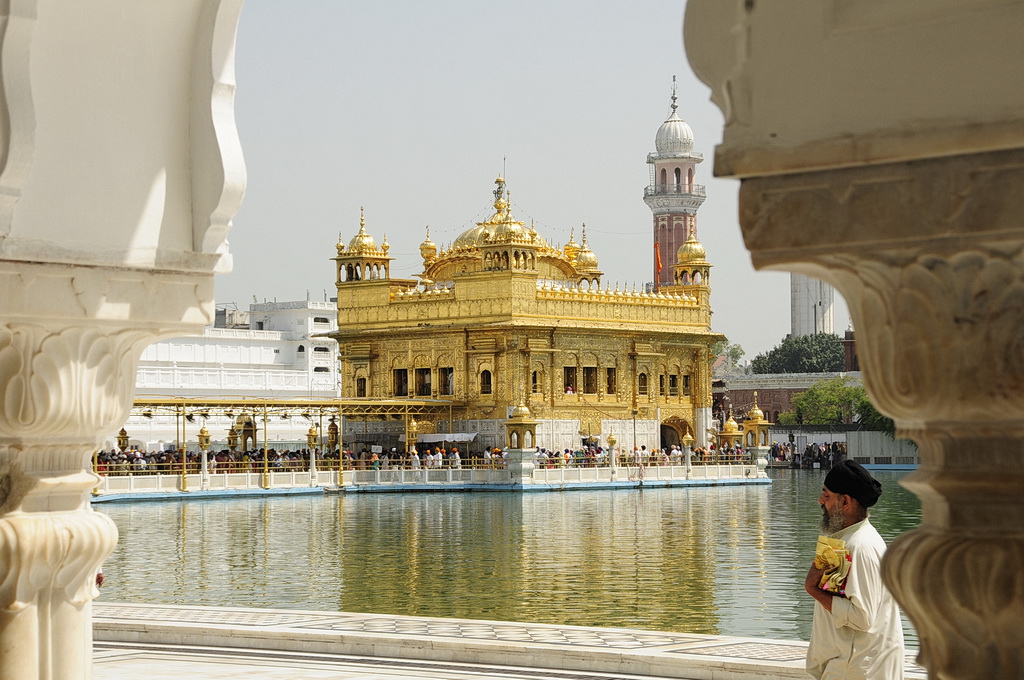
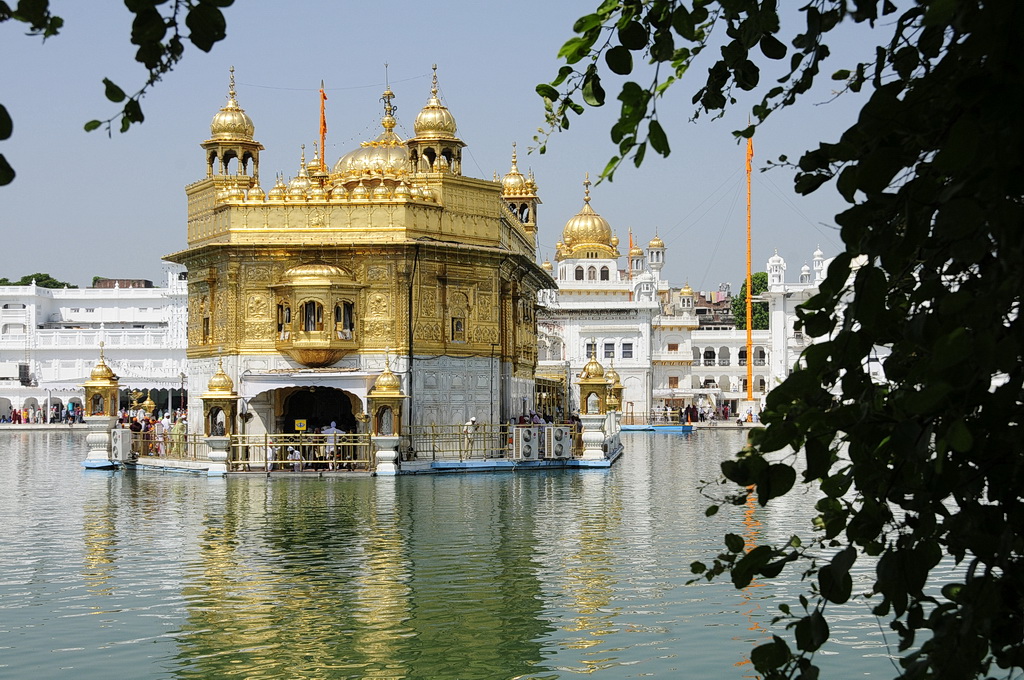
Amritsar is a bustling city. Its traffic surpasses anything most Europeans have ever experienced – or could even imagine. We leave our motorcycles at the hotel and continue on foot. Our destination is the city's most famous landmark, the Harmandir Sahib, better known as the Golden Temple.
The contrast could hardly be greater. Outside, the bustle of everyday India never stops, while within the walls of the temple complex an atmosphere of peaceful tranquillity prevails. Sacred hymns drift across the holy pool at the heart of the complex. In silence, pilgrims walk along its edge. Some take a ritual bath, others sit quietly in meditation on the white marble steps, while still others patiently join the queue, waiting for their turn to enter the Golden Temple itself.
12. Day: Amritsar - Sri Ganganagar / ca. 275 km
We leave Amritsar behind and continue our journey south. Our next destination is Rajasthan. As the distance to Bikaner is too great to cover in a single day, we break the journey with an overnight stop in Sri Ganganagar. The landscape is already beginning to change. The mountains are now behind us, and we enter the vast plains of the Punjab.
13. Day: Sri Ganganagar - Bikaner / ca. 240 km
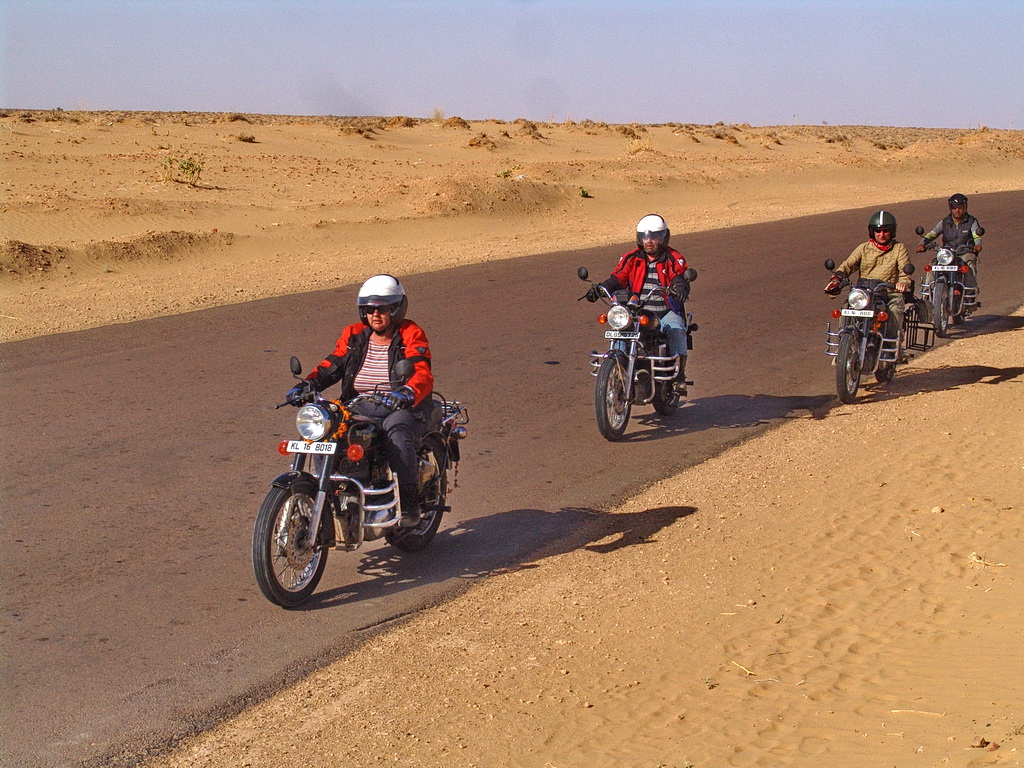
Today we reach Bikaner, our first stop in Rajasthan. The changing landscape announces itself long before we arrive. Rajasthan is a desert state, although the classic sand dunes do not begin until much farther west. At first, the lush vegetation of the Punjab gradually gives way to a barren landscape of rock, sand and sparse scrub. Shades of yellow, grey and pale green now dominate the scenery.
14. Day: Bikaner
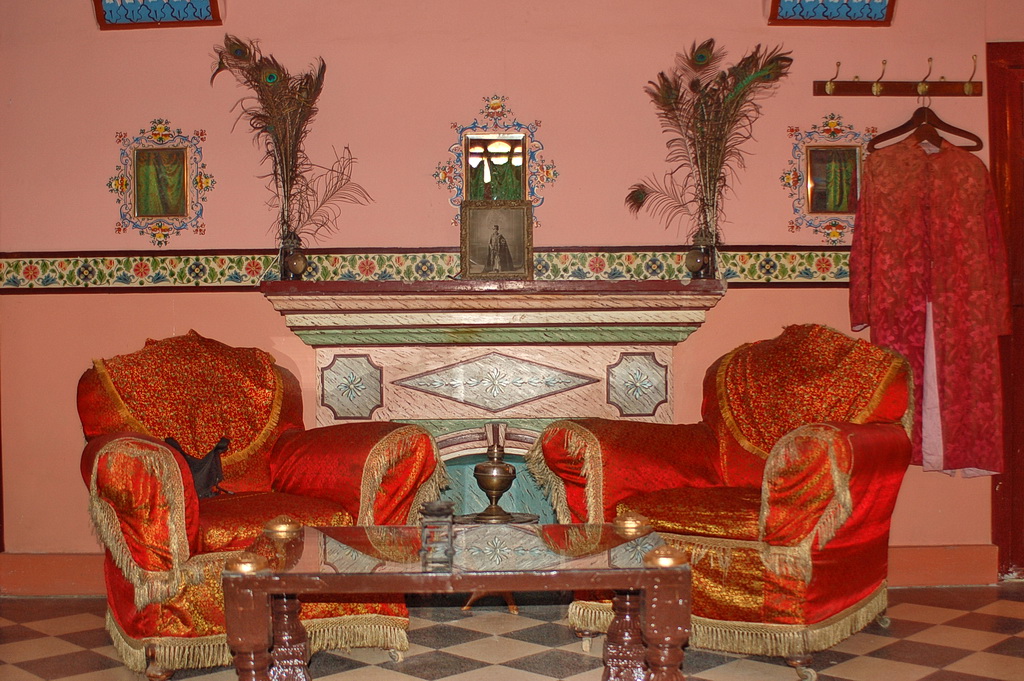
Three things make Bikaner particularly memorable. First of all, there is the magnificent Junagarh Fort, which is, of course, one of the highlights of our visit. Then there is the vibrant life of the city itself. Simply watching the constant bustle at the main railway level crossing is great entertainment. Finally, we stay in a hotel that was once the residence of a senior minister to the Maharaja. Spending the night here feels almost like staying in a museum. One of the minister's descendants has transformed the estate into a hotel, with the aim of recreating the atmosphere of a bygone era – and he has succeeded brilliantly.
15. Day: Bikaner - Jodhpur / ca. 250 km
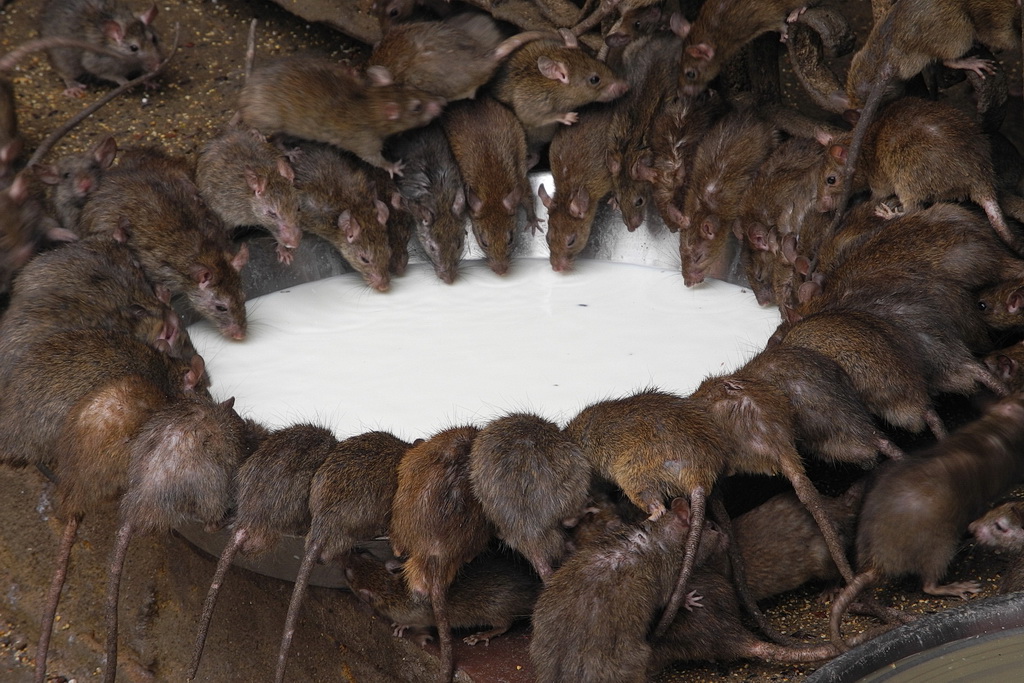
Our journey now takes us deeper into the heart of Rajasthan. But before setting off for Jodhpur, there is one truly extraordinary place on today's itinerary. About 30 kilometres beyond Bikaner lies Deshnok, a small, dusty town on the edge of the desert. It is home to one of India's most unusual temples: the Karni Mata Temple.
The stars of the Karni Mata Temple are rats – sacred rats. Hundreds of them scurry across the temple courtyard, climb over walls and steps, and happily feast from the large bowls of food provided by the temple attendants. The little creatures show no fear whatsoever. They seem to know perfectly well that everything here revolves around them. If a rat runs across your feet, it is considered a sign of great good fortune. And if it happens to be a white rat, local belief has it that you need no longer worry about your future. I have to admit, however, that I have never seen a white rat, and the little creatures have always kept well away from my feet too. A pity, really.
16. Day: Jodhpur
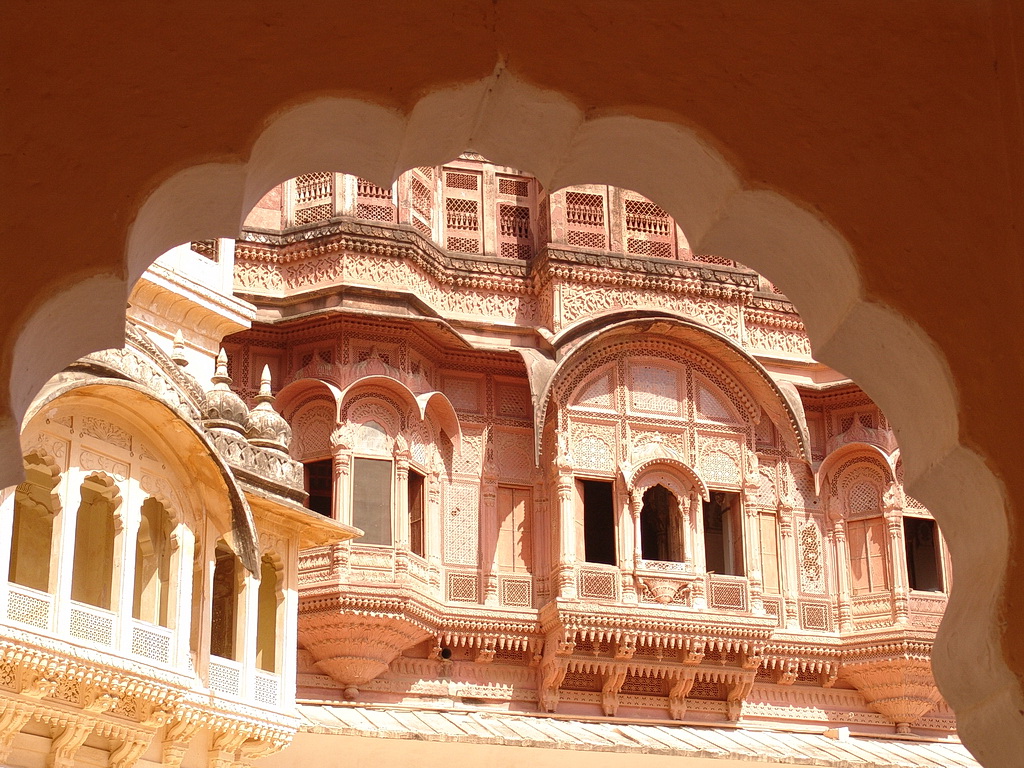
After a relaxed morning by the beautiful pool of our hotel, we set off to visit the magnificent Mehrangarh Fort. This vast and exceptionally well-preserved palace complex is one of the highlights of Jodhpur. The Maharaja has received numerous awards for the exemplary way in which the history of both the palace and the city is presented to visitors. We highly recommend hiring the excellent audio guide, which is available for just a few rupees.
Afterwards, we visit the Jaswant Thada Memorial, built entirely from gleaming white marble. Somehow, it immediately feels familiar. It is no coincidence that this elegant monument is often referred to as the Taj Mahal of Jodhpur.
The real highlight of the day – at least for food lovers – is the Makhani Lassi at the Shri Mishrilal Hotel. Connoisseurs claim it is the finest lassi in all of India. I look forward to hearing your verdict.
By the way: don't let the name confuse you. In India, many restaurants call themselves "Hotel", even though you cannot actually stay there overnight.
17. Day: Jodhpur - Pushkar / ca. 185 km
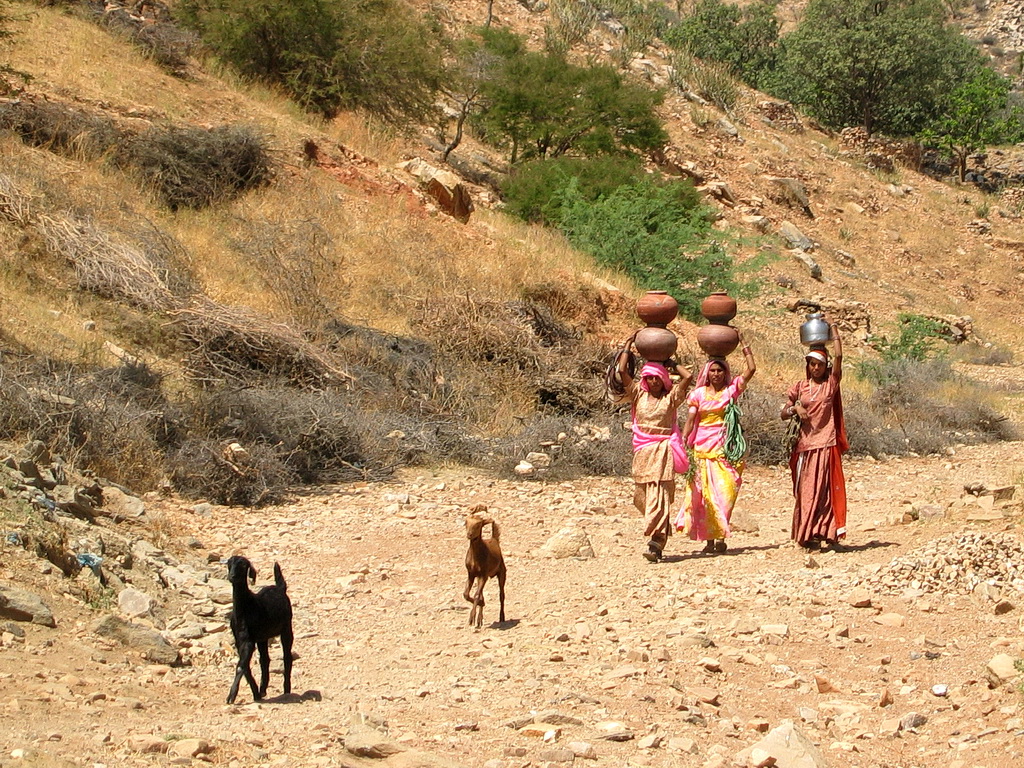
We are now in the heart of Rajasthan's desert landscape. Sand and rocky terrain stretch in every direction. The only splashes of colour are the women in their brightly coloured saris, standing out like vibrant flowers against the yellows and greys of the desert.
By early afternoon, we arrive in Pushkar – sacred Pushkar.
18. Day: Pushkar
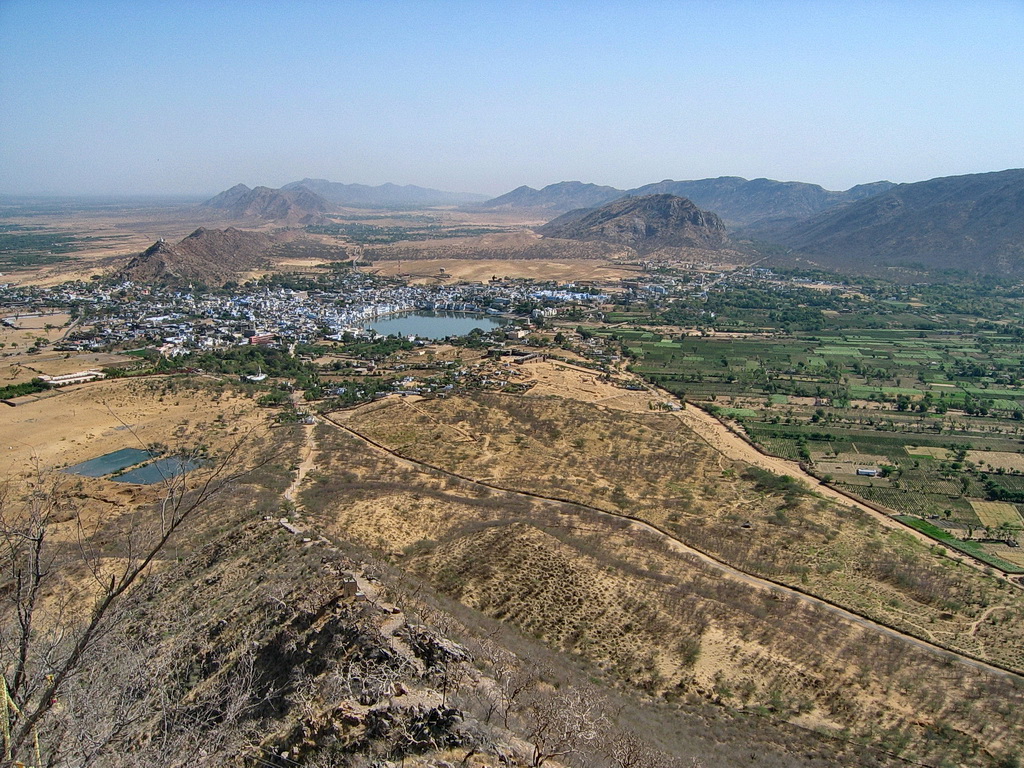
Pushkar – sacred Pushkar.
Devout Hindus from all over India make a pilgrimage to Pushkar, hoping to take a purifying bath in the sacred lake at least once in their lifetime. Around its shores stand some 400 temples. Although Brahma is revered in Hindu mythology as the creator of the universe, it is only here, in Pushkar, that a temple is dedicated to him. Why that is so is a long story – one I shall tell you another time.
But it is not only Hindu pilgrims who are drawn to Pushkar. Backpackers from all over the world discovered this little town many years ago. One welcome side effect is that you can enjoy excellent pizza here – although only vegetarian. In fact, all food served in Pushkar is strictly vegetarian, and alcohol is completely prohibited. That, too, has religious reasons.
Pushkar is also a true shopper's paradise. Many of the colourful shirts, trousers and scarves sold in specialist shops around the world originate here. As a result, pilgrims and backpackers are joined by traders from many different countries, all contributing to the unique atmosphere of the town.
A truly colourful spectacle.
19. Day: Pushkar - Jaipur / ca. 145 km
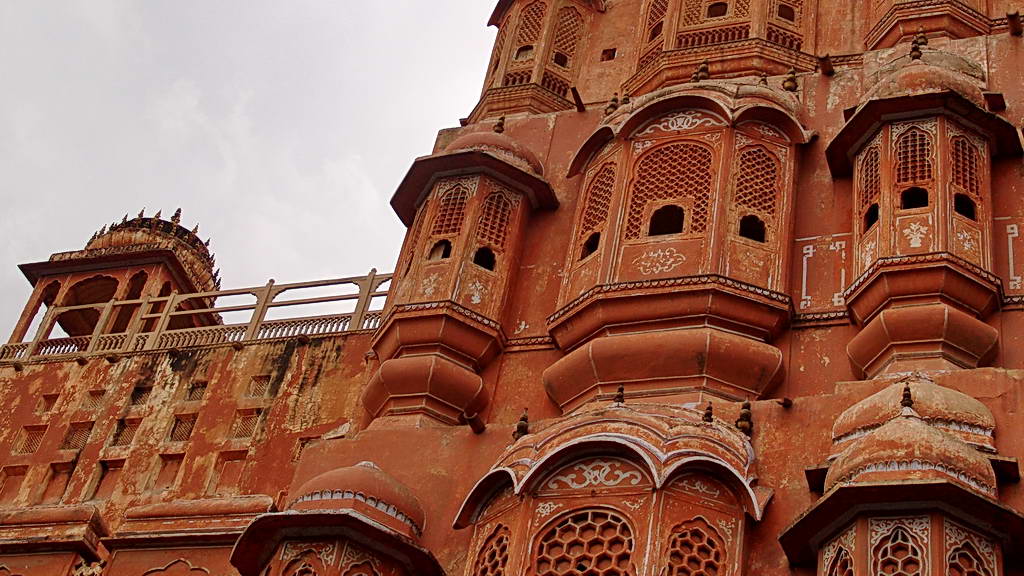
It is only a two- or three-hour ride to Jaipur, leaving us plenty of time in the afternoon to wander through the old city and soak up its lively – no, let's call it hectic – atmosphere. Naturally, we will pass the famous Hawa Mahal, the Palace of Winds, and anyone who wishes can also visit the City Palace. Jaipur is also home to several famous lassi shops.
Jaipur is widely regarded as one of Rajasthan's great highlights. Personally, however, I think the city is slightly overrated. Half a day is enough to experience its atmosphere and form your own opinion.
20. Day: Jaipur - Agra / ca. 240 km
Today is our final day in Rajasthan. We set off for Agra and will probably not reach our destination until the evening. Although the highway between Jaipur and Agra is excellently maintained, it is also one of the busiest roads in the region. So be prepared for a long and demanding day in the saddle.
21. Day: Agra - Gwalior / ca. 120 km
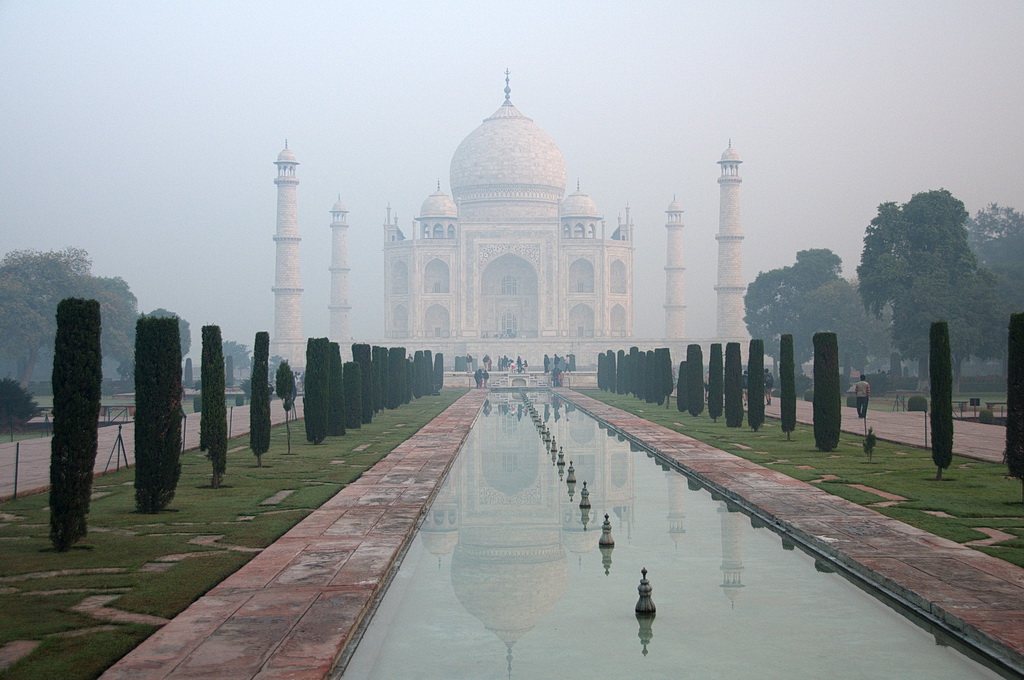
We have an early start today. We need to reach the Taj Mahal before sunrise. Not only is this the most magical time to experience the monument in the soft light of dawn, but it is also before the crowds arrive. Later in the day, the Taj Mahal is usually packed with visitors, and much of its special atmosphere is lost.
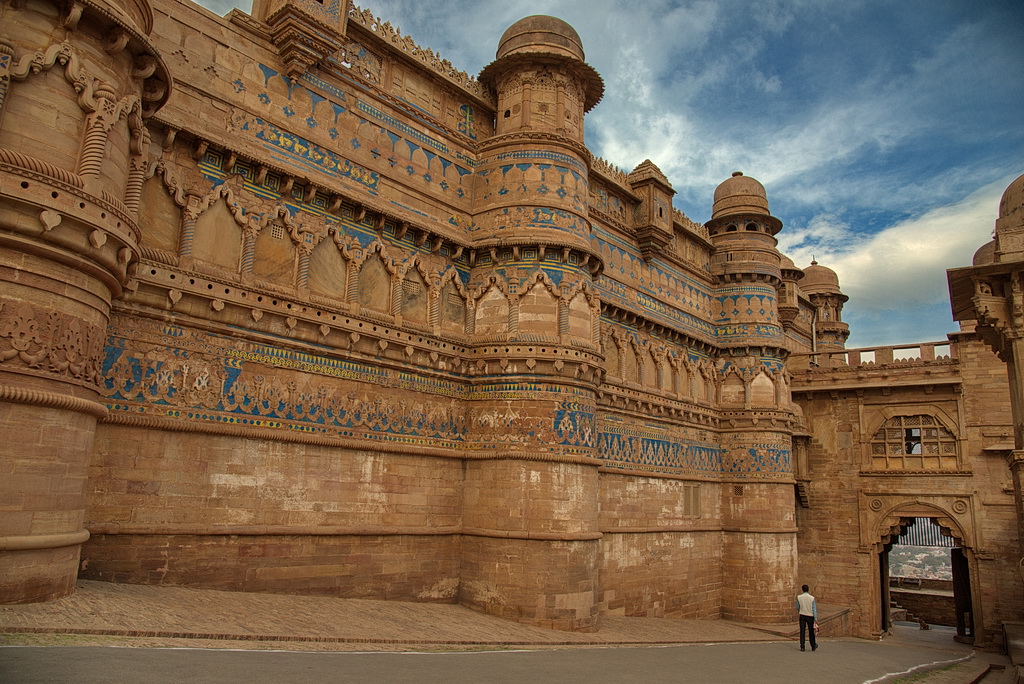
After our visit to the Taj Mahal, we return to the hotel for breakfast. Afterwards, we set off for Gwalior. As today's ride is not particularly long, we have plenty of time in the afternoon to explore Gwalior's magnificent – yet surprisingly little-known – fort and palace complex at our own pace.
22. Day: Gwalior - Orchha / ca. 120 km
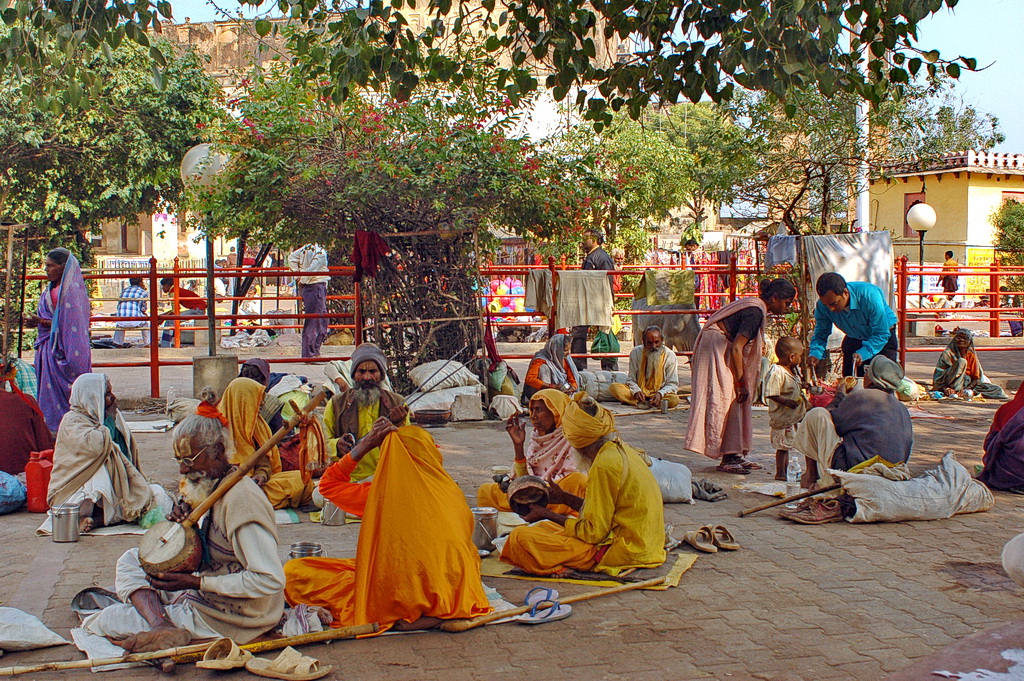
We leave Gwalior behind and continue to the pilgrimage town of Orchha. Orchha has a very special atmosphere. Pilgrims in their saffron-coloured robes sit and lie along the streets. They eat, sing, pray or simply do whatever they feel like doing. Completely devoted to their faith, they trust that their god Rama – to whom Orchha's most important temple is dedicated – will take care of everything. Sacred chants can be heard wherever you go. Life seems to move at a gentler pace here. I am sure you, too, will automatically slow down.
But Orchha has far more to offer than sadhus and the Rama Temple. We explore a magnificent palace complex, a sacred river, the impressive royal cenotaphs and much more. You certainly won't be bored in Orchha.
23. Day: Orchha - Sanchi / ca. 285 km
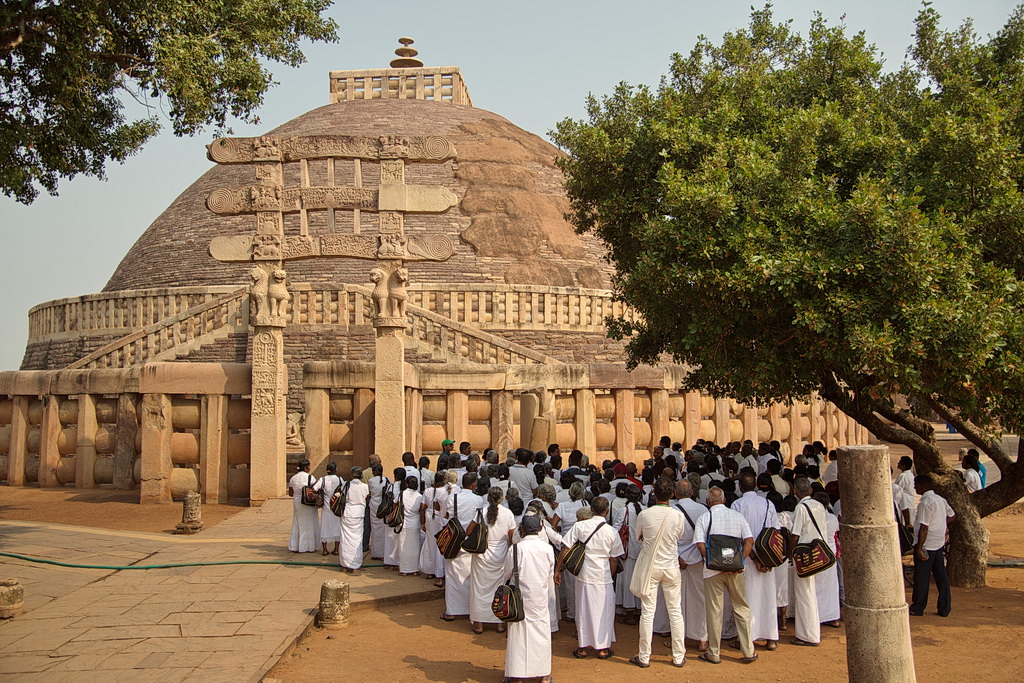
In the third century BC, much of India was shaped by Buddhism. Emperor Ashoka played a decisive role in this development. Following a bloody military campaign, he is said to have renounced war and embraced Buddhism. He subsequently ordered stone pillars to be erected throughout his empire, inscribed with the principles of his policies and teachings. These so-called Ashoka Pillars are today among the most famous surviving monuments of his reign.
At that time, Sanchi was one of the most important Buddhist centres in India. Many of the sanctuaries built more than 2,000 years ago have survived to this day, above all the famous stupas. They rank among the oldest and most significant monuments of Buddhist culture in India.
24. Day: Sanchi - Maheshwar / ca. 330 km

The next two days are all about covering miles. We have a long way to travel before reaching southern India. Fortunately, Maheshwar makes a worthwhile stop roughly halfway along the route. This small town on the banks of the Narmada impresses with its beautiful riverside setting and its magnificent palace. Here we will spend the night.
25. Day: Maheshwar - Ajanta / ca. 260 km
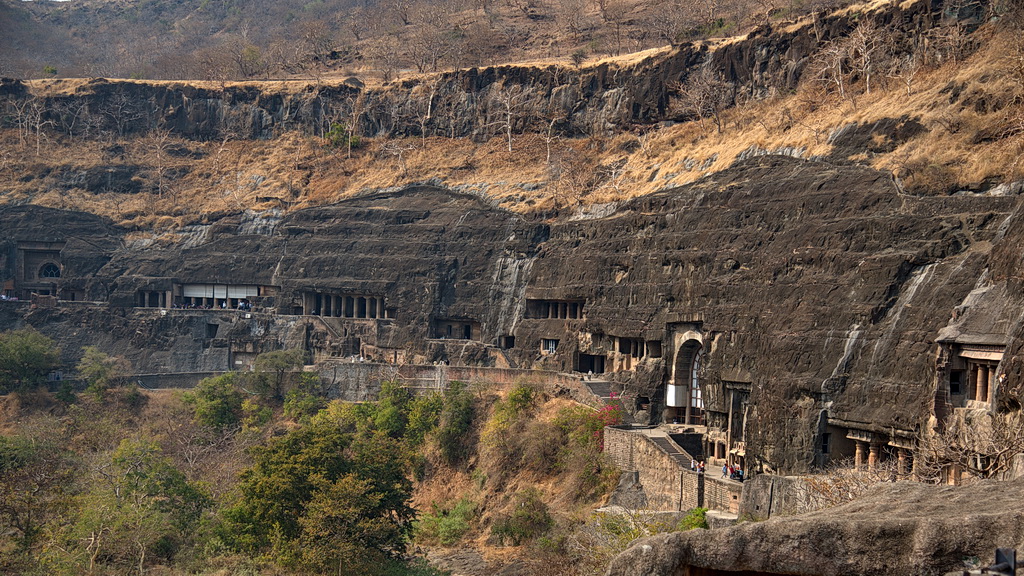
Our marathon ride continues, and by evening we reach our next destination, Ajanta. What awaits us there is one of the most remarkable treasures of India's cultural heritage.
26. Day: Ajanta
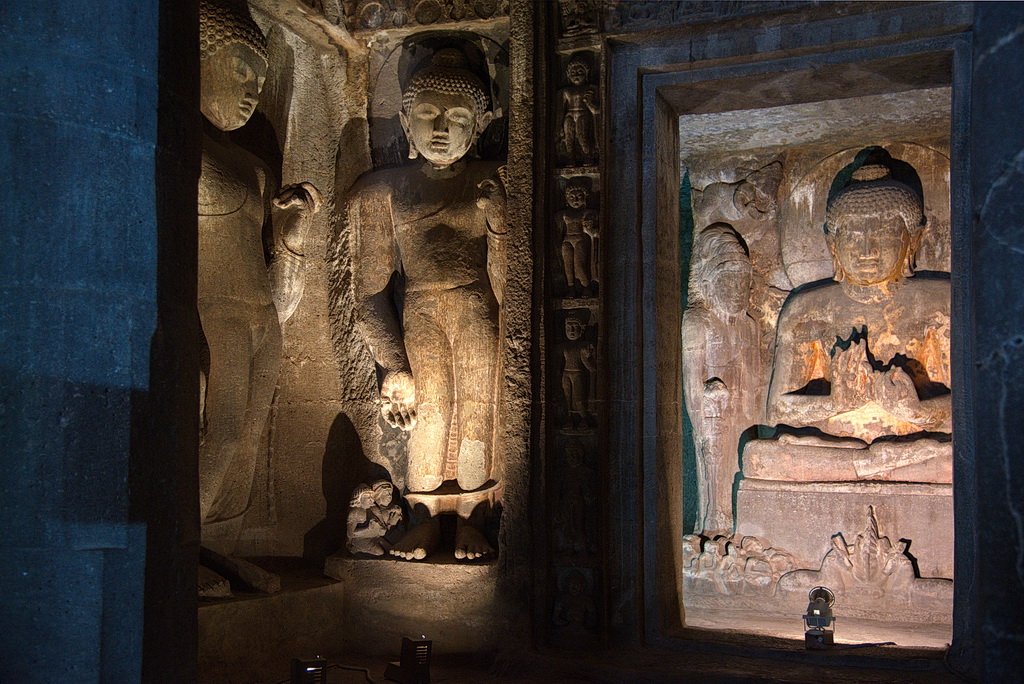
For me, the Ajanta Caves are one of the highlights of this journey. Over many centuries, from the 2nd century BC until the end of the 7th century AD, Buddhist monks lived in a secluded valley near the present-day town of Ajanta. Through years of painstaking work, they created a total of 29 cave temples, carving them directly into the rock face.
The caves vary greatly in both their state of preservation and their degree of completion. Some are richly decorated with intricate stone carvings and adorned with magnificent wall paintings. Others were never finished. From the 7th century onwards, as Buddhism gradually declined and hostility towards the monks increased, they were forced to leave the valley. With their departure, work on the cave temples came to an end.
27. Day: Ajanta - Ellora / ca. 100 km
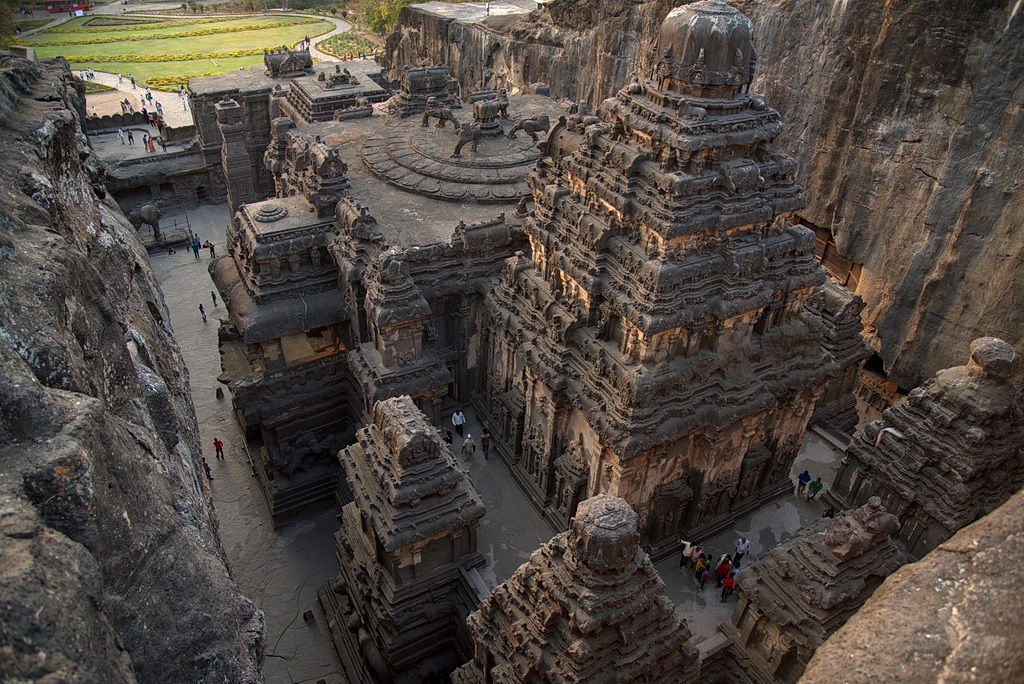
Just a short ride away, only about two hours from Ajanta, we discover another remarkable collection of cave temples at Ellora. Unlike Ajanta, these 34 temples were created not only by Buddhists, but also by Hindus and Jains.
Yet it is the Kailasa Temple that captures our full attention. Long before reaching it, the upper part of the temple comes into view, hinting that something extraordinary awaits. But it is only after stepping through the entrance gate that you are left speechless. I still remember my first visit. It felt as though I had been struck by lightning. The sheer scale of this monument is almost impossible to describe. I simply stood there, asking myself: How could something like this even be possible?
The Kailasa Temple is regarded as the largest monolithic temple in India, carved entirely from a single mass of rock. According to scholarly estimates, thousands of labourers, stonemasons and artists worked on its construction over a period of more than a hundred years. It is an extraordinary achievement of organisation, craftsmanship and artistic vision.
28. Day: Ellora - Panchgani / ca. 355 km
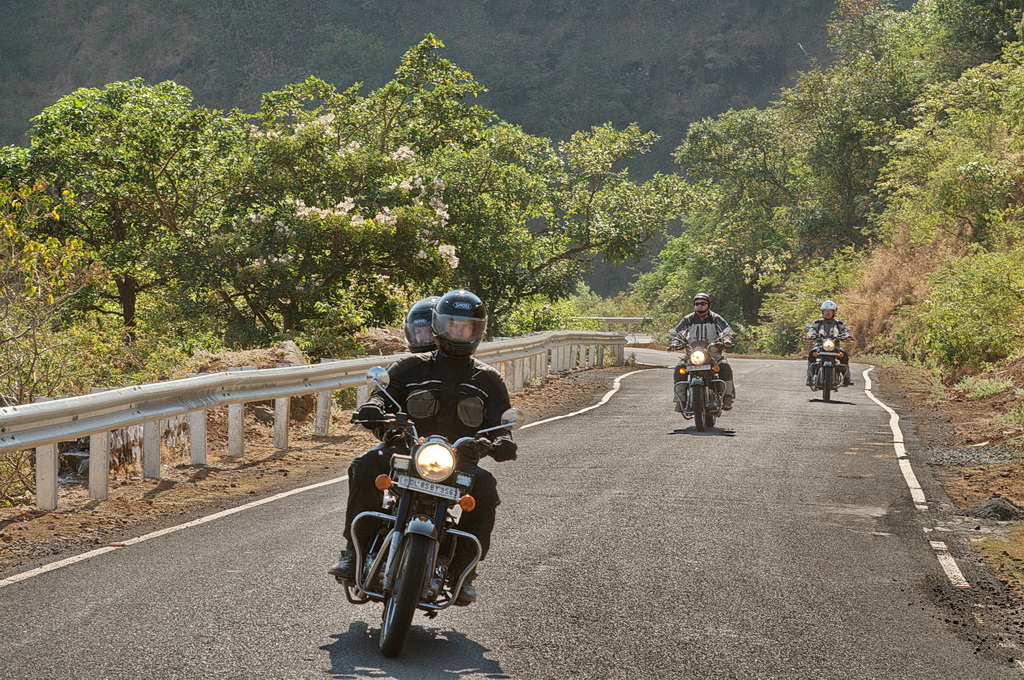
Today, another long ride lies ahead of us. By the afternoon, we reach the mountains of the Western Ghats, the long mountain range stretching along India's west coast, forming the western edge of the Deccan Plateau. With the lush green landscape, the bends return as well. From here on, riding takes on a whole new character – smooth, winding and simply a joy.
29. Day: Panchgani - Kolhapur / ca. 170 km
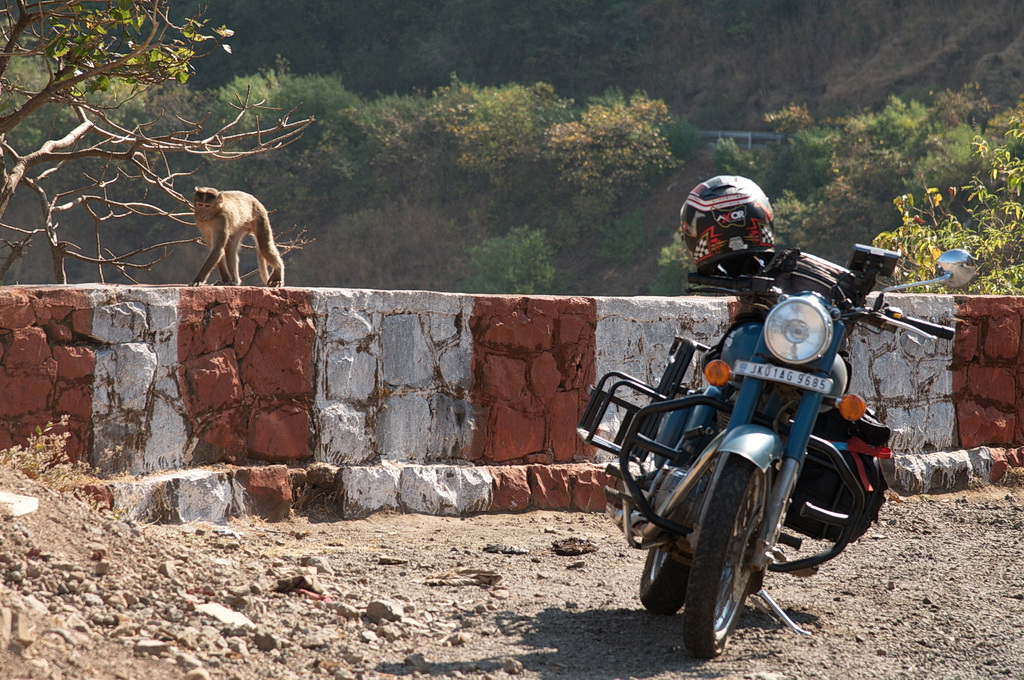
Today we continue our ride through the Western Ghats. After the long, straight roads of the past few days, it is a real pleasure to enjoy the winding roads once again. The landscape is lush and green, the climate is pleasant, and we can simply relax and enjoy a wonderful day's riding before reaching Kolhapur in the afternoon.
30. Day: Kolhapur - Goa / ca. 235 km
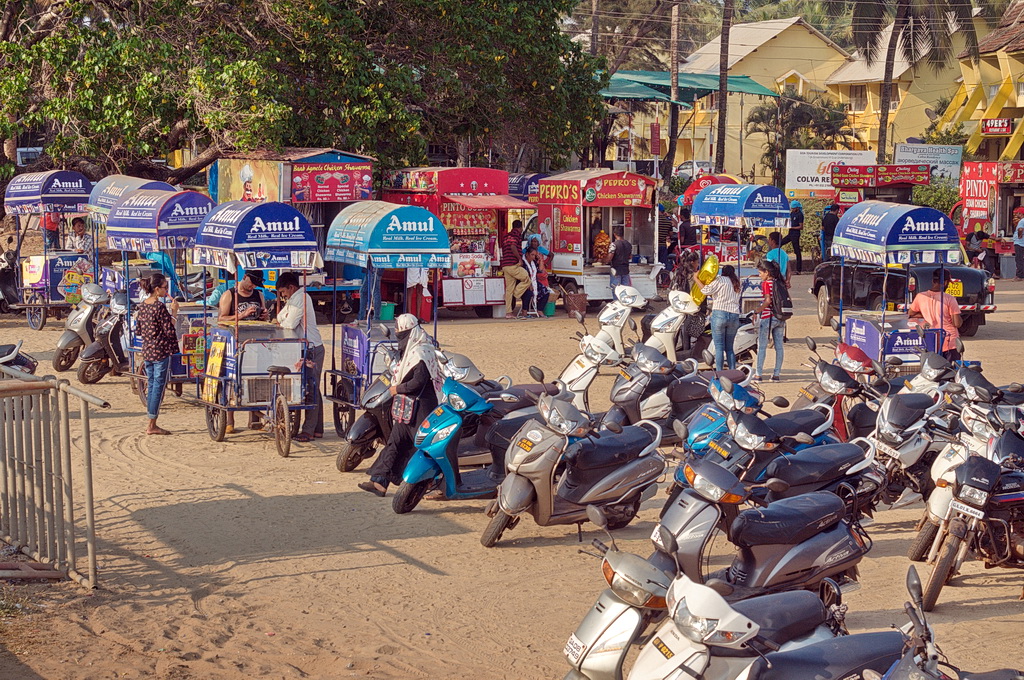
At last, we leave the mountains behind and arrive in Goa, the former Portuguese colony and once the legendary paradise of the hippie generation. Today, little remains of either. Indians have long since reclaimed their own holiday paradise.
31. Day: Goa
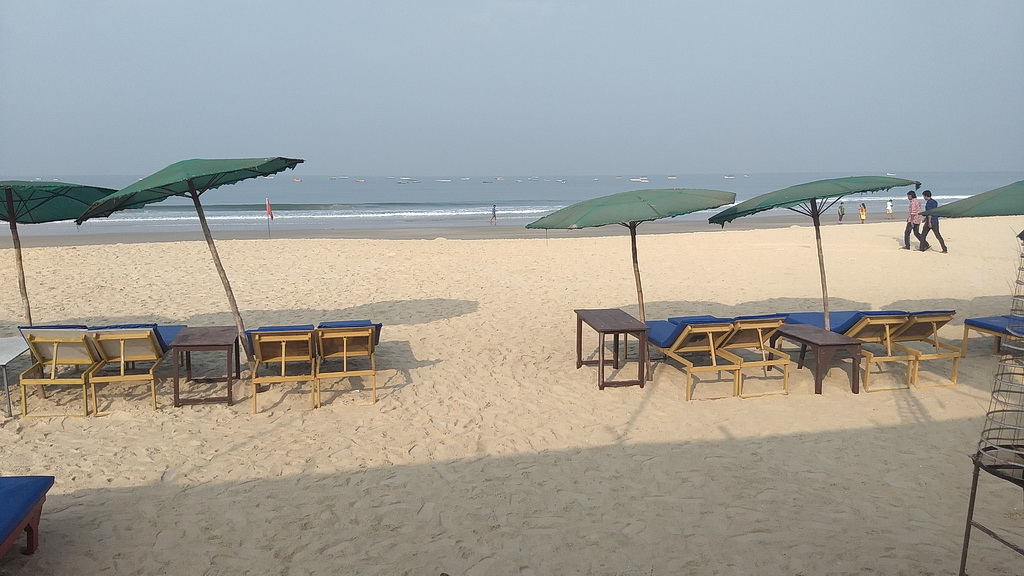
Today is all about relaxing. A lazy day on the beach, a drink (or perhaps two) at one of the cosy beach cafés, a stroll through the little shops, or simply a walk along the shore – the important thing is to make the most of this well-earned day of rest. And, for once, without our Enfields.
32. Day: Goa - Hampi / ca. 315 km
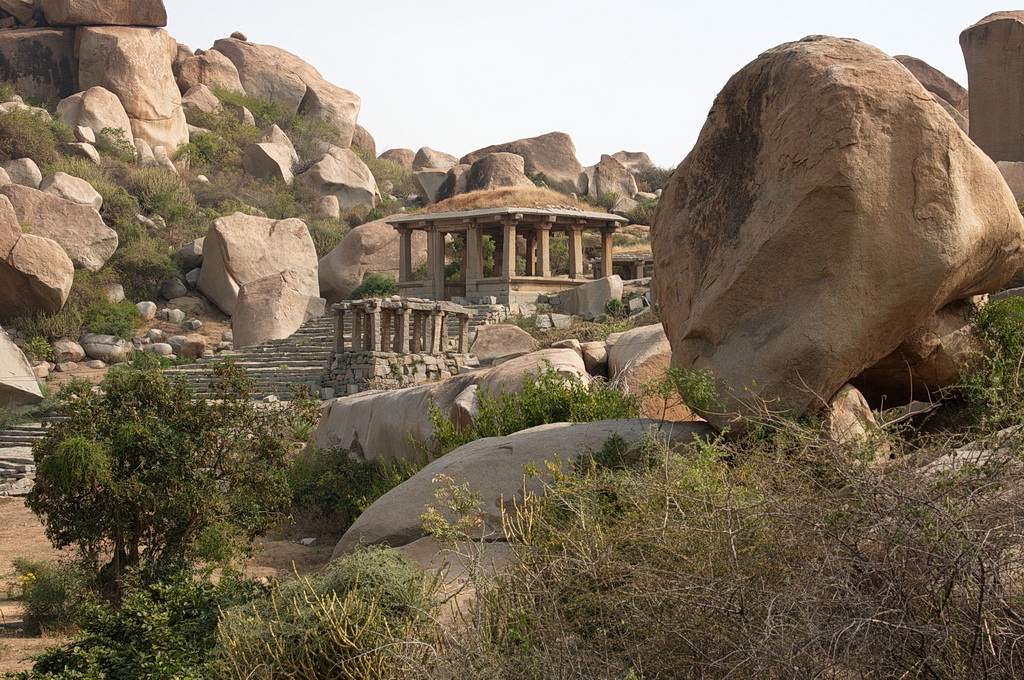
Now it's time to get back on the road. Well rested and full of fresh energy, we set off today to cover a respectable 315 kilometres. Leaving the coast behind, we head inland towards Hampi – one of the most extraordinary places in India.
33. Day: Hampi
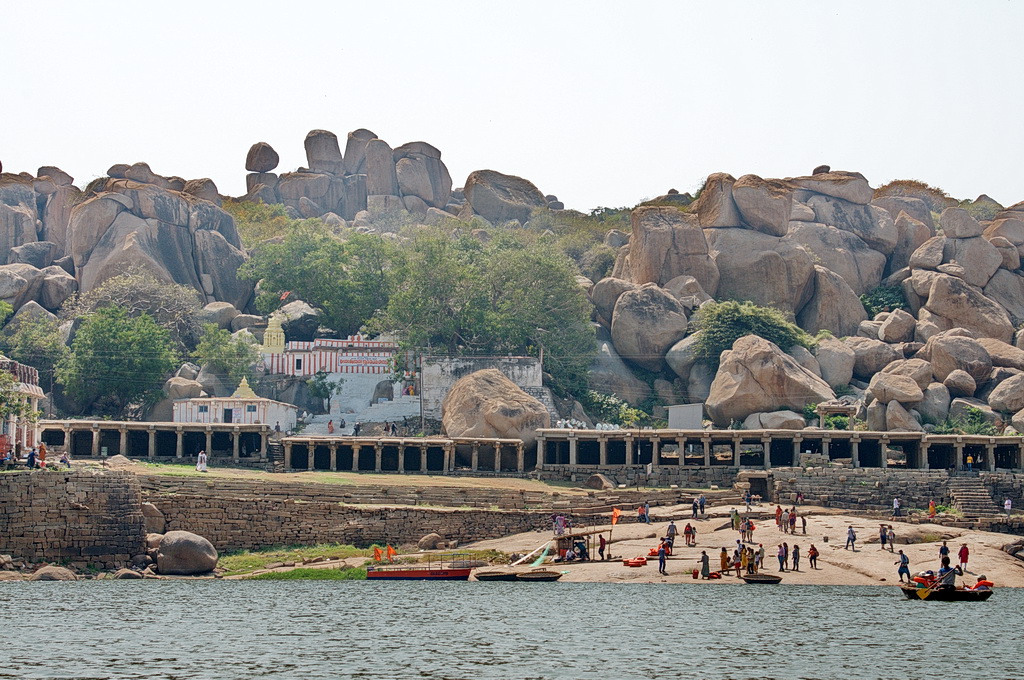
Hampi looks as though giants, in some distant age, amused themselves by hurling enormous boulders at one another. Everywhere, these gigantic rocks lie scattered across the landscape, either on their own or piled into spectacular formations. Nestled among them are temples large and small, together with the remains of palaces and royal stables.
These monuments date back to the time when Hampi was the capital of the mighty Vijayanagara Empire, from the mid-14th to the mid-16th century. Discovering everything in a single day is almost impossible. Yet even a leisurely walk through this vast archaeological site gives a vivid impression of the city's former grandeur.
34. Day: Hampi - Chitradurga / ca. 140 km
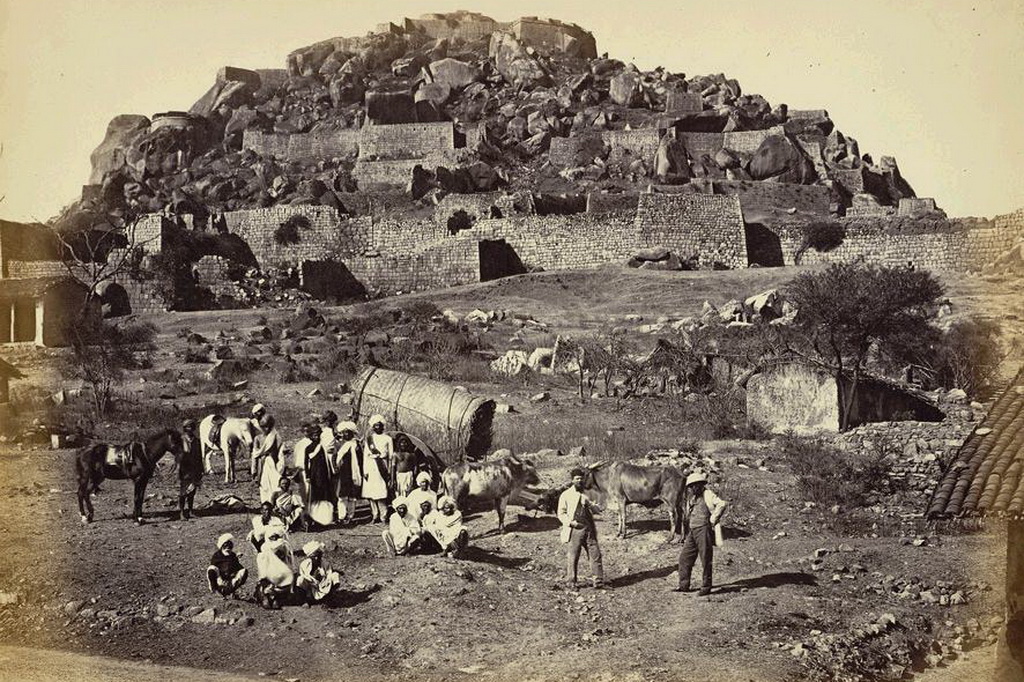
Our journey continues south. In Chitradurga, we make a short stop. Rising on a granite hill almost 1,000 metres high, directly opposite our hotel, stands Chitradurga Fort, an immense fortress dating back to the time of the Vijayanagara Empire.
A historic photograph gives an impression of how impressively the fortress once dominated the surrounding landscape.
35. Day: Chitradurga - Belur / ca. 165 km
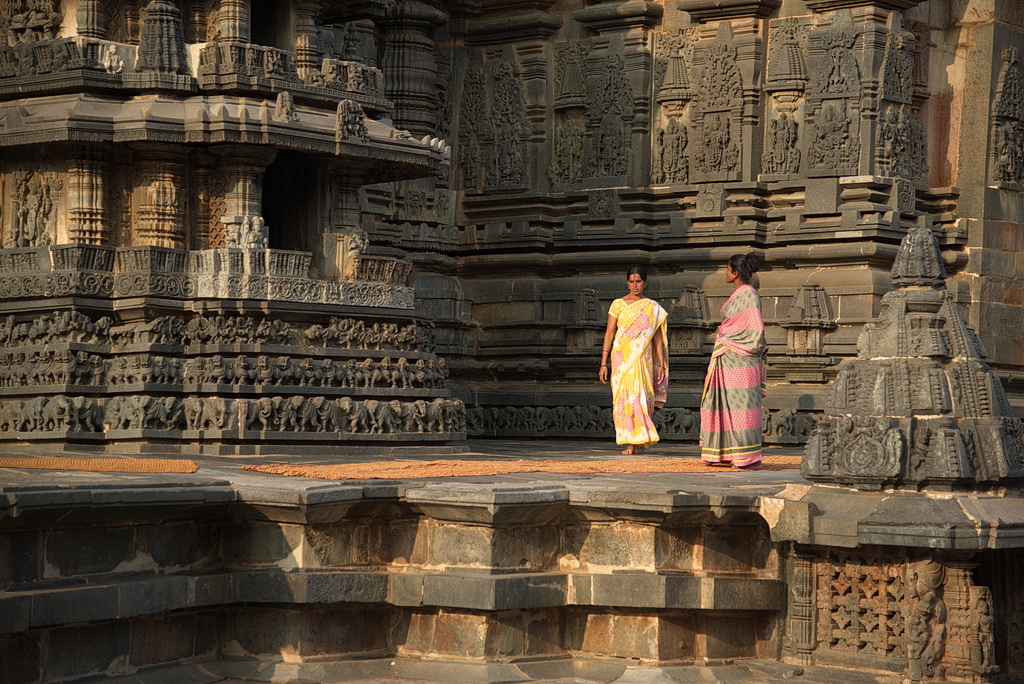
Belur is renowned for the Chennakesava Temple, built in the 12th century and regarded as one of the finest examples of Hoysala architecture. The closer you get, the more details reveal themselves. Countless delicate stone carvings adorn the exterior walls, while inside it is above all the beautifully turned soapstone pillars that capture the eye.
After the monumental temples and mighty fortresses of the past few days, Belur impresses in a very different way. Here, it is not sheer size that leaves a lasting impression, but the astonishing richness and intricacy of its stone carvings.
36. Day: Belur - Shravanabelagula - Mysore / ca. 175 km
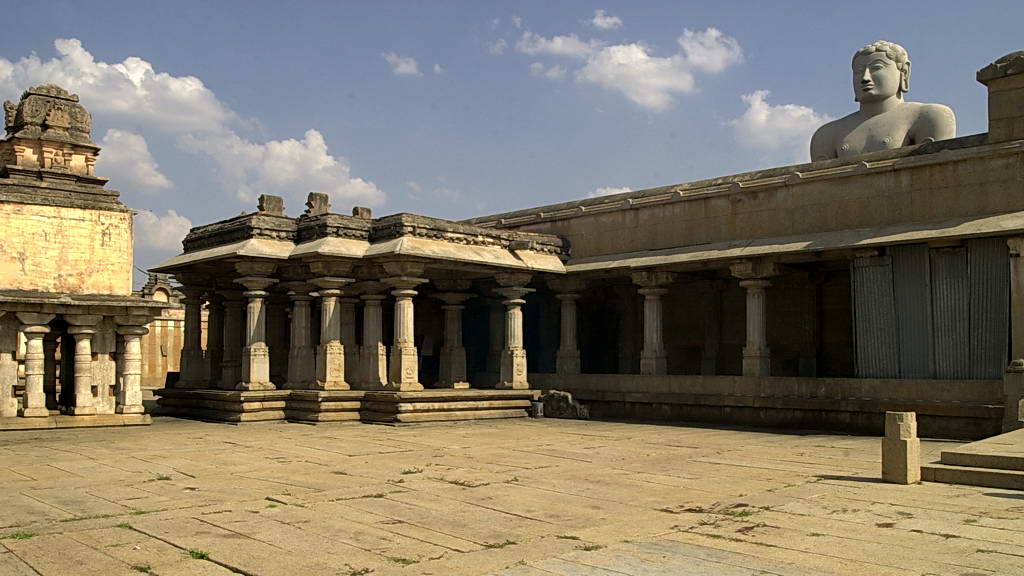
On our way to Mysore, we make a detour to Shravanabelagola, one of the most important Jain pilgrimage sites in India. Perched high on a hill is a Jain sanctuary with the colossal statue of Gomateshwara.
The climb involves ascending numerous steps carved into the rock. Shoes are not permitted, but the stone is usually far too hot for bare feet. So we make the ascent in our socks.
37. Day: Mysore
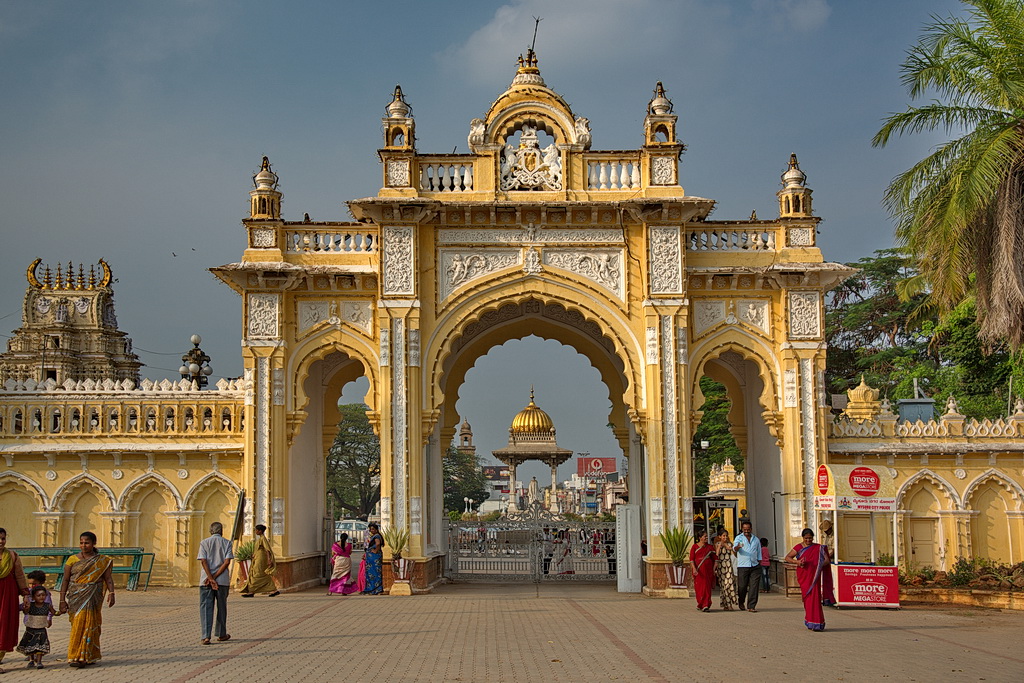
In Mysore, a genuine Maharaja still resides in his palace. Although most of the palace is open to visitors, he and his family continue to live there. On special occasions – including every Sunday evening at 7:00 pm – the entire palace is illuminated by thousands of light bulbs. Yet even in daylight, it is a truly impressive sight.
Completed in 1912, the palace was built to the designs of the British architect Henry Irwin. It combines traditional Hindu, Indo-Islamic, Rajput and European architectural styles. Its layout is said to have been inspired by Buckingham Palace in London.
Otherwise, Mysore is a lively city with countless markets, large and small, and even an entire street lined with excellent coffee roasteries. Yes, even in tea-loving India, coffee is grown – in the nearby hills of Coorg. In Mysore, the beans are processed and roasted.
Just five kilometres away, on Chamundi Hill, stands the largest monolithic Nandi statue in India. Nandi, the sacred bull, is the mount of the god Shiva.
38. Day: Mysore - Ooty - Mettupalayam / ca. 175 km
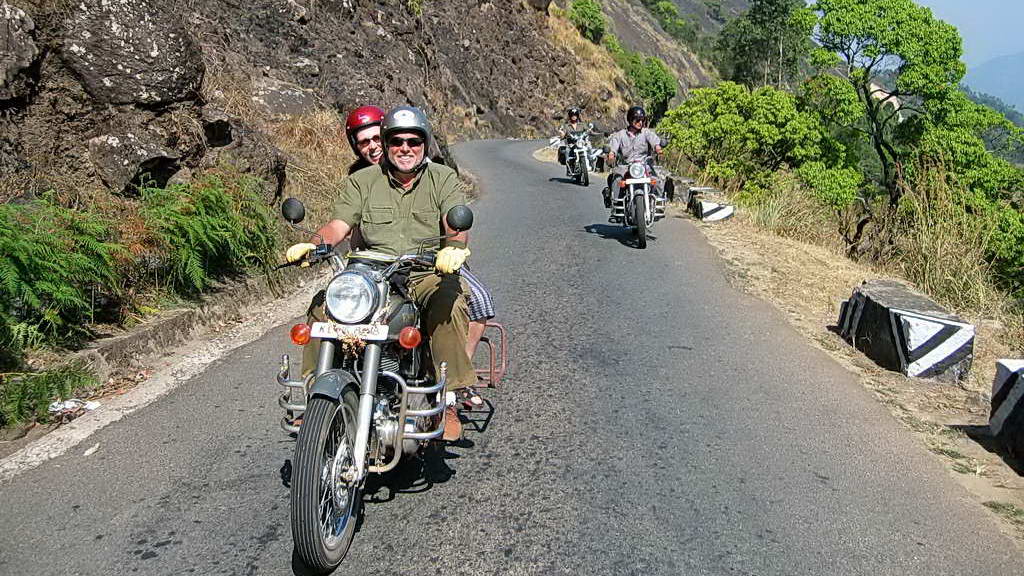
The ride from Mysore to Mettupalayam takes us through a remarkable variety of South Indian landscapes. We begin by crossing a vast wildlife sanctuary before climbing into the Nilgiri Hills, part of the Western Ghats, on a wonderfully winding back road. For me, this is one of the finest days of riding on the entire tour – perhaps even my favourite.
In Ooty, a former British hill station, we stop for a short break. Once, British colonial officials escaped the heat of the plains here; today, it is mainly affluent Indians who spend their summer holidays enjoying the cool mountain climate. Ooty is also famous for its homemade chocolate. The little shops throughout the town offer countless varieties, and of course we won't miss the chance to sample one or two of them.
Afterwards, we descend the other side of the Nilgiri Hills, following countless bends all the way down to Mettupalayam.
39. Day: Mettupalayam - Munnar / ca. 190 km
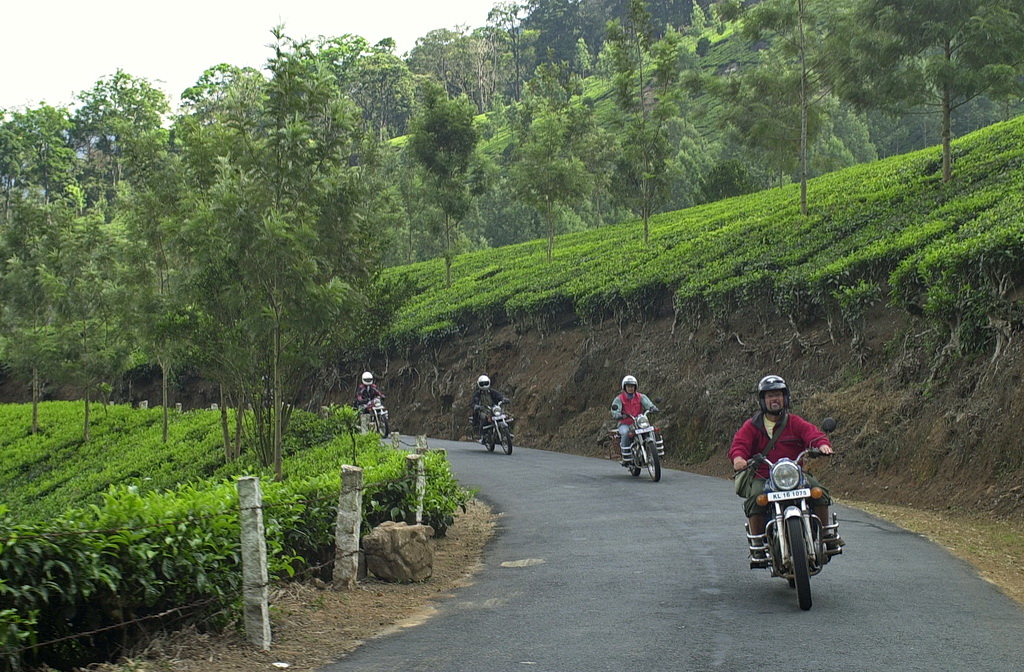
We have now arrived in the land of tea and spices. Much of Kerala's wealth has its roots here – and it was precisely this wealth that once attracted the European colonial powers, who believed it really ought to belong to them.
For hour after hour, we are surrounded by tea plantations. Perhaps, for the first time, we see how cardamom and pepper are grown, and, if time permits, we can visit a tea factory to discover the journey that this refreshing drink takes from the tea bush to our cups.
The roads are in good condition, wonderfully winding and, at times, quite narrow – especially when one of the large buses comes towards us.
40. Day: Munnar - Madurai / ca. 155 km
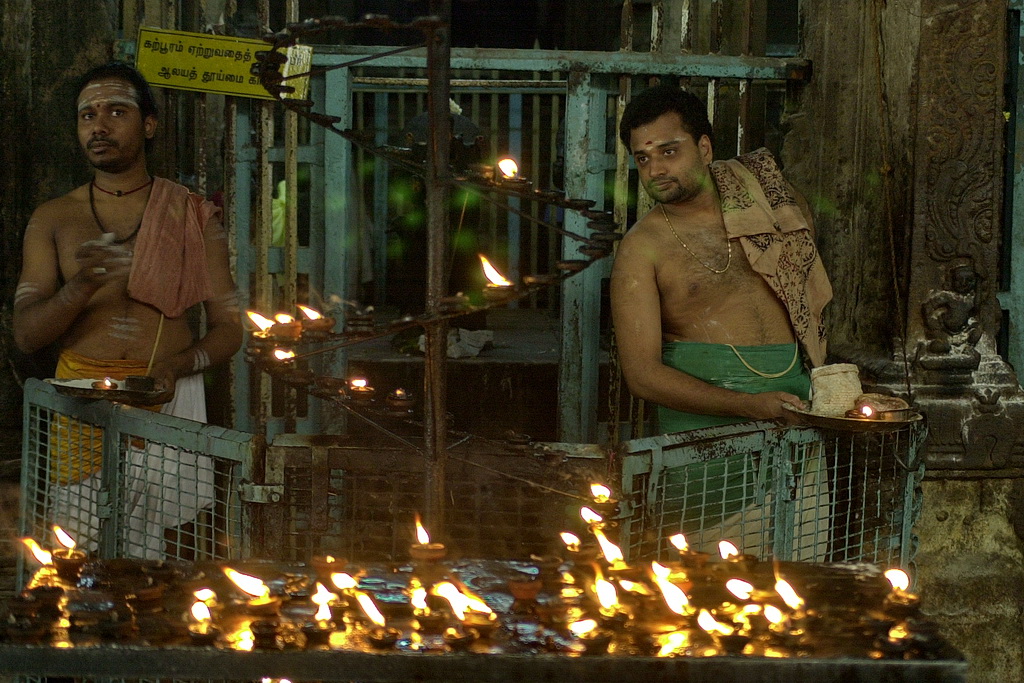
Our ride continues through the tea plantations for a while before we reach Madurai in the afternoon. Here stands one of the largest and most important Hindu temple complexes in South India.
While much of northern India was ruled by Islamic dynasties for centuries, Tamil Nadu remained largely untouched. As a result, many religious traditions were preserved here more completely than elsewhere. Few places demonstrate this more impressively than the Meenakshi Temple in Madurai.
41. Day: Madurai - Kanyakumari / ca. 245 km
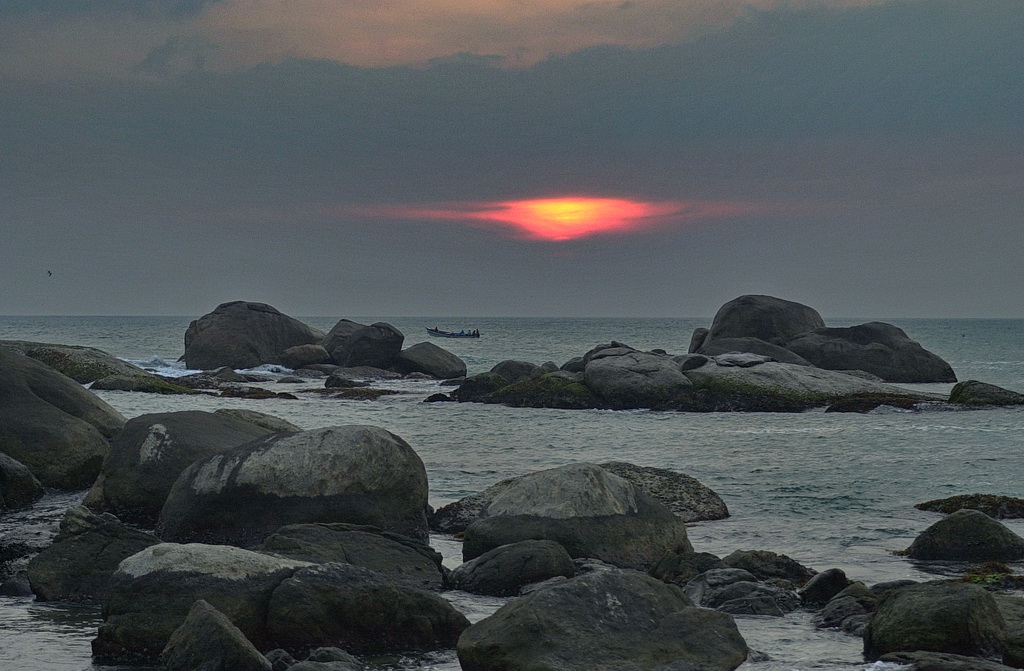
Another 250 kilometres lie ahead before we reach our destination: Kanyakumari, the southernmost tip of mainland India. We've made it. We have cruised the length of India – from the high passes of the Himalayas to the place where three seas meet, making it one of the holiest places for Hindus. To the south lies the Indian Ocean, to the east the Bay of Bengal, and to the west the Arabian Sea.
At around 8:00 pm, the temple usually holds its evening puja, a religious ceremony that is normally reserved for Hindus. Only here are non-Hindus also permitted to enter the sanctuary and take part in the ritual. Men, however, may enter the temple only with their upper body uncovered, while this rule does not apply to women. With a red tilak on our foreheads, we leave the temple and bring our journey to a fitting close with a well-chilled Kingfisher beer.
42. Day: Kanyakumari - Varkala / ca. 140 km
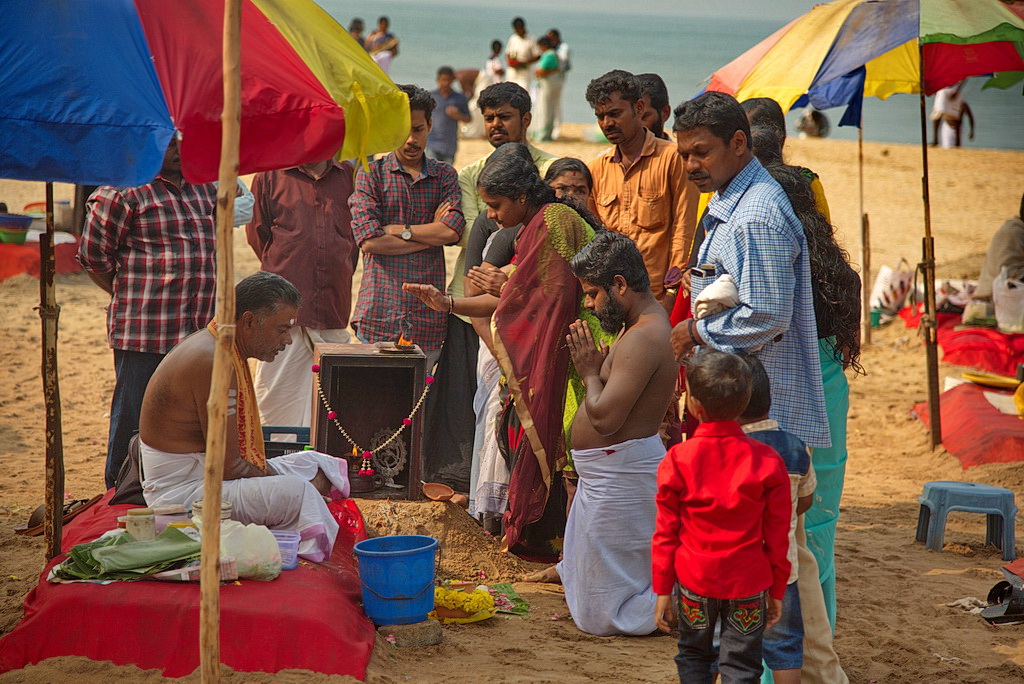
Every morning, hundreds, often thousands, of people gather at the southern tip of the country, eagerly awaiting the sunrise. Naturally, we too will rise early to witness this unforgettable spectacle. The first rays of the sun are greeted with gasps of wonder and admiration. Afterwards, we enjoy breakfast before setting off on the final stage of our great journey. On arrival in Varkala, we check into our hotel, hand over the motorcycle keys and take a deep breath.
What an experience! And what a wonderful place to bring this journey to a close. In the evening, we dine at one of the many cliff-top restaurants, enjoying freshly caught fish while looking out over the Arabian Sea. When the last glasses have been emptied, we return to the hotel. I am quite certain that, in your dreams that night, you will find yourself back in Srinagar, reliving the entire journey from the very beginning.
43. Day: Varkala
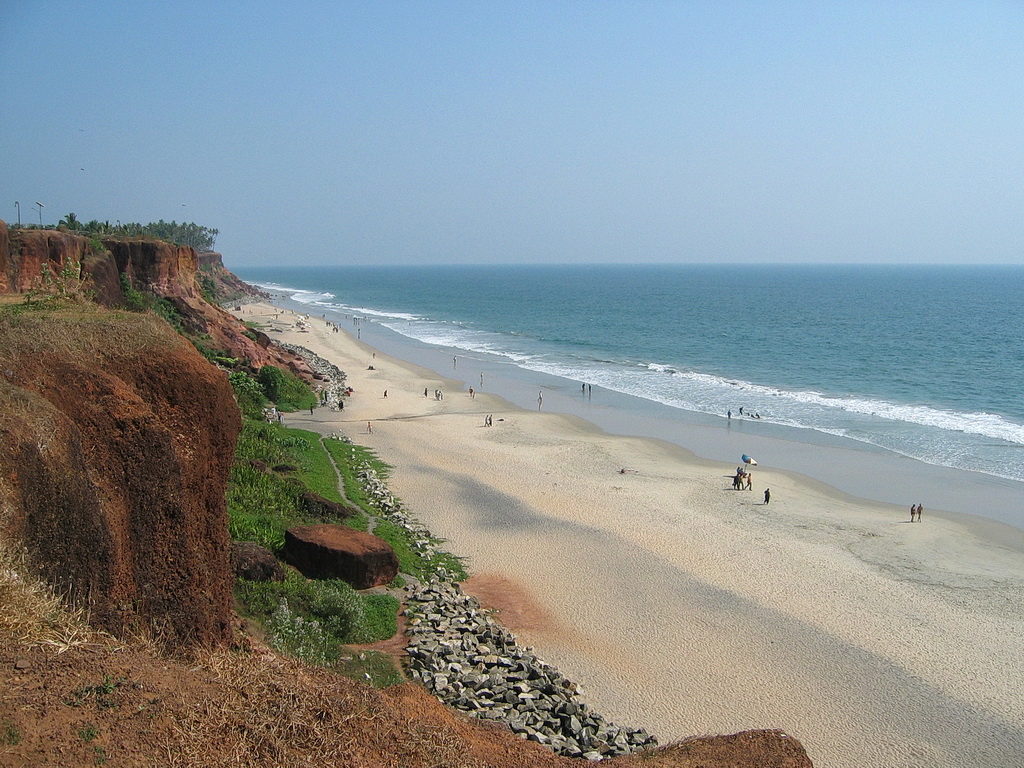
Carpe diem
Seize the day! Enjoy the moment! Varkala offers countless ways to savour life's simple pleasures: delicious food, a relaxing Ayurvedic massage, yoga on the hotel rooftop, a swim in the warm waters of the Arabian Sea, a walk along the beach, or simply a refreshing drink at one of the little cafés on the cliff – whatever takes your fancy.
44. Day: Varkala
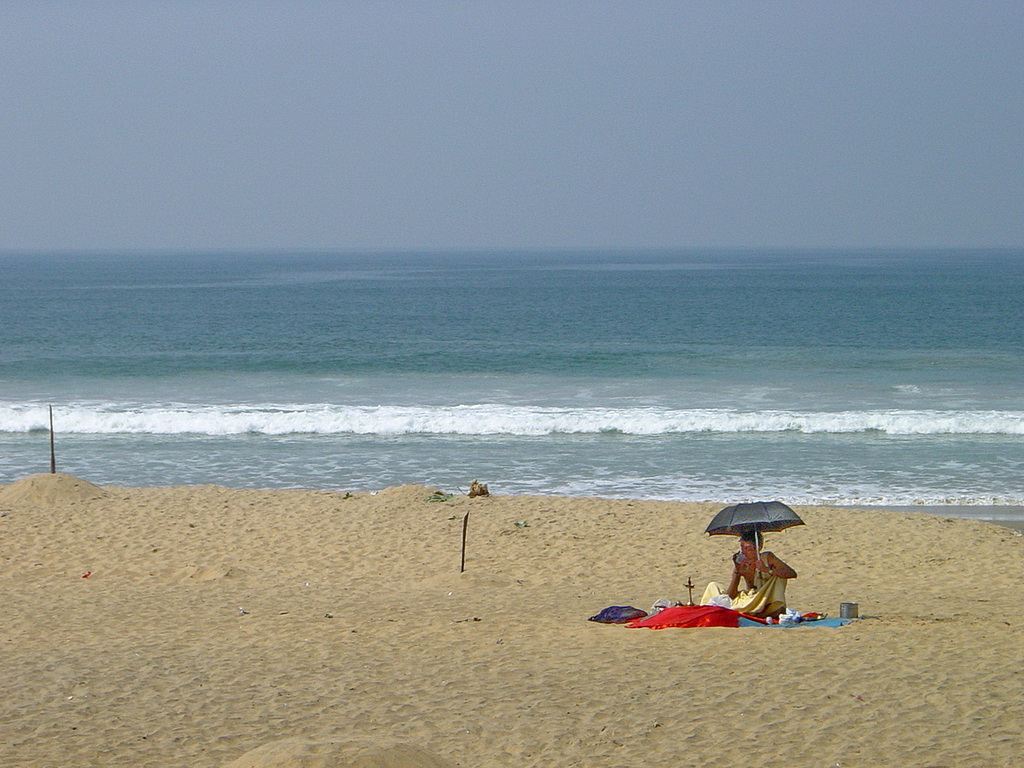
Everything must come to an end – even a journey like this. Today is that day. Over our final dinner together, we look back on the past few weeks and relive the many unforgettable moments we have shared. Then it is time to say goodbye. During the night, your flight will take you home.
45. Day: Flight Home
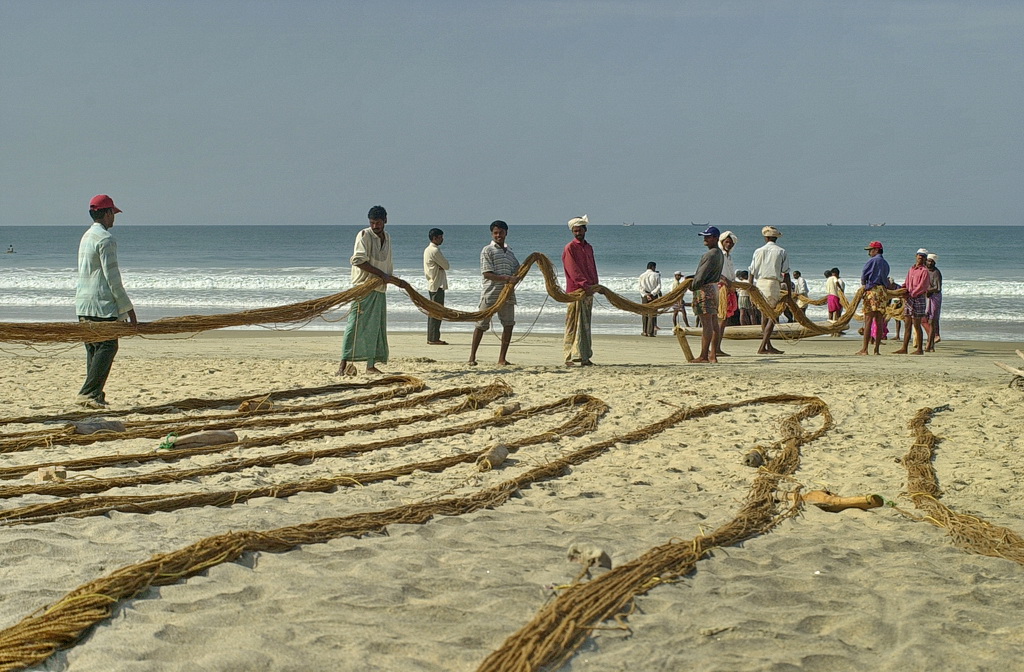
I hope this journey has left you wanting to discover even more of India, and that this will not be your last visit to this fascinating country.
Until we meet again – Namasté
Map
Tour-Infos & Services
- Total Distance appx. 6.345 km
- 34 Riding days
- 40 x Accommodation in Hotels
- 1 x Accommodation in Tents
- 2 x Accommodation in House Boats
- 43 x Breakfast
- 43 x Dinner
- Royal Enfield Classic 500cc (included in the tour price)
- Himalayan 411 (Option)
- Himalayan 450 (Option)
- Lubricants (Petrol/Oil)
- Service Car
- Mechanic Service
- Tour guide on the motorbike
- min: 4 - max: 12 Driver
Dates & Prices
05.09.2027 - 19.10.2027
- Driver: 6.500,00 €
- Co-Driver: 5.600,00 €
- Single-Room Surcharge: 900,00 €
- Himalayan 411: 350,00 €
- Himalayan 450: 500,00 €
Booking deadline: 11.07.2027
WofI-Telegramm
Understand India before you book.
Reports, clear assessments
and honest insights from over
25 years of experience in India.
You might also be interested in:
Nepal - Mystic Mountains
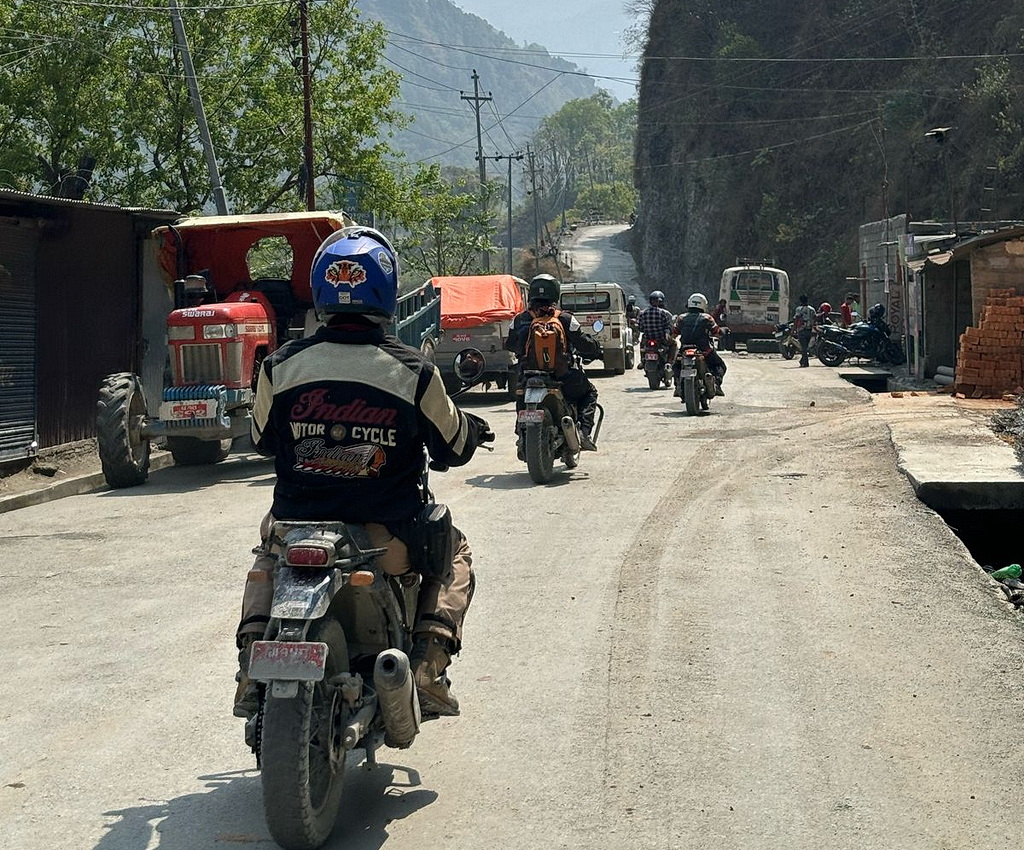
Motorcycle adventure from Varkala to Goa
Tropical-exotic South India
Motorcycle adventure from Goa to Varkala

South India - Coast-to-Coast
Rajasthan
Ma-Ka-Go-Ma
Heart of India
Ladakh & Zanskar – Over the Highest Passes in the World

The Grand Ladakh-Kashmir-Trip
Garhwal & Kumaon

Adventure Spiti-Valley
North East,Tribes & Trails - NEU
